Commercial Glazing Maintenance Checklist for Property Managers
Protect Your Investment with Proactive Glass and Frame Maintenance
Commercial glazing systems are designed to last 20-30 years, but only with proper maintenance. Neglected seals, dirty weep holes, and unnoticed cracks can escalate into water infiltration, energy waste, and expensive emergency replacements.
This checklist gives property managers a practical, season-by-season maintenance framework to maximize the lifespan of their building's glazing systems.
Why Glazing Maintenance Matters
The cost of proactive maintenance is a fraction of reactive repair:
- A failed seal costs $200-400 to replace per unit. Ignoring it leads to water damage, mold, and interior finish repairs costing $2,000-5,000+.
- A fogged IGU reduces the building's energy efficiency by 20-30% in that zone. Multiply that across a facade and the HVAC cost impact is significant.
- A cracked panel in a high-traffic area is a liability issue. If someone is injured by falling glass, the property owner bears responsibility.
Quarterly Visual Inspection Checklist
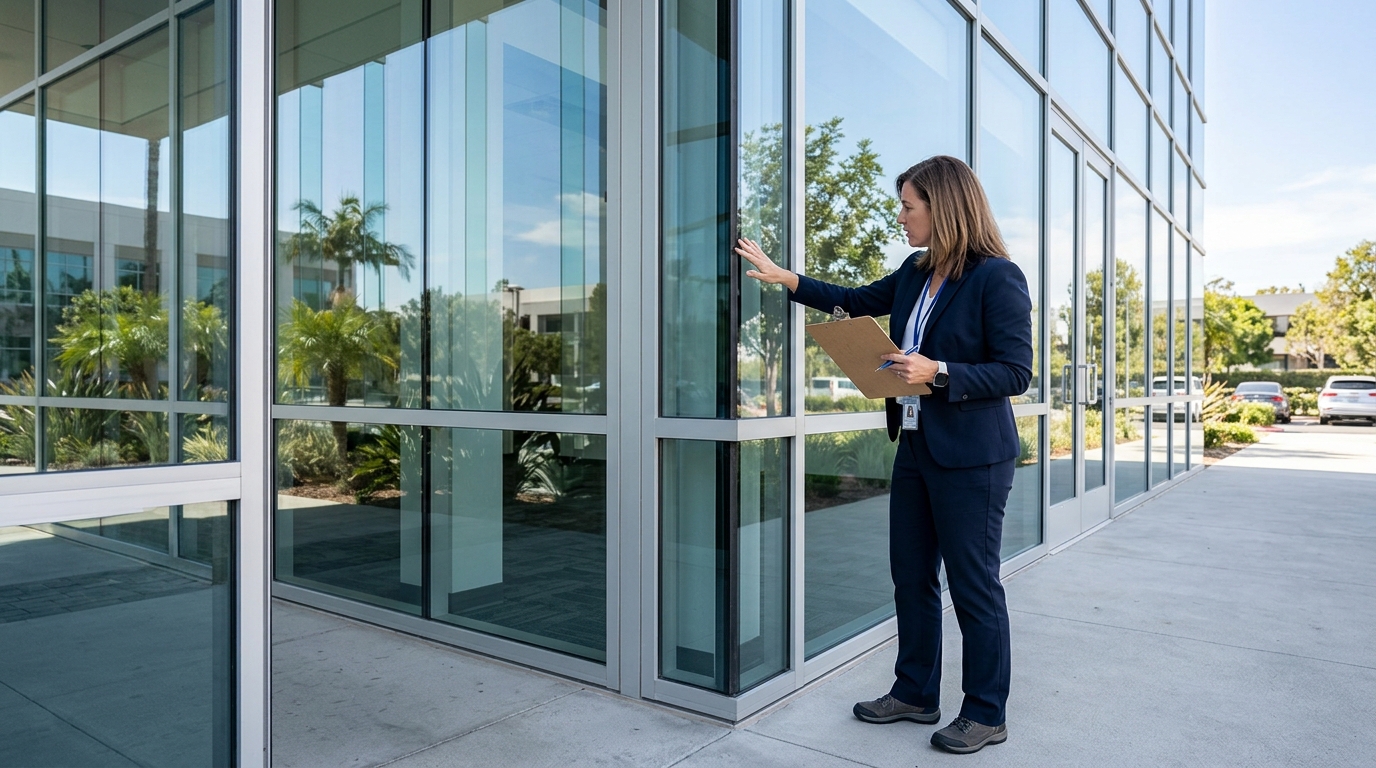
Walk the building perimeter and interior once per quarter. Look for:
Exterior:
Interior:
Seasonal Maintenance Tasks
Spring (March-April)
- Clear weep holes of debris accumulated over winter
- Inspect all exterior sealant joints, UV and temperature cycling during winter causes the most sealant degradation
- Clean glass surfaces with a pH-neutral commercial glass cleaner (avoid ammonia-based products on coated glass)
- Test all operable windows and doors for smooth operation; lubricate hardware as needed
Summer (June-July)
- In hot climates (Phoenix, Inland Empire, Palm Springs), inspect for thermal stress cracks, these appear as cracks originating from the glass edge with no impact point
- Check that solar control films are intact and not peeling or bubbling
- Verify that automatic door closers are properly adjusted (heat expansion can affect alignment)
Fall (September-October)
- Pre-winter sealant inspection and repair, address any gaps before the rainy season
- Clean and clear all weep holes and drainage channels
- Inspect weather stripping on operable units and replace if compressed or torn
- Check emergency glass (fire-rated panels) for any damage or code compliance issues
Winter (December-January)
- Monitor for condensation patterns that indicate seal failures
- After heavy rain, inspect interior sides of all glazing for water infiltration
- Document any new damage for insurance and maintenance records
When to Call a Professional
Schedule a professional glazing inspection when you notice:
- Recurring water infiltration around the same frames after every rain
- Multiple fogged IGUs on the same facade (may indicate a systemic issue)
- Frame corrosion that extends beyond surface pitting
- Glass that has shifted within the frame (indicates structural gasket failure)
- Any cracked tempered glass, tempered glass can shatter unexpectedly once compromised
A professional glazing contractor can perform a comprehensive assessment, identify root causes, and recommend targeted repairs vs. system replacement.
Build a Maintenance Relationship
The most cost-effective approach to glazing maintenance is a standing service relationship with a licensed glazing contractor. This gives you:
- Priority scheduling for emergency repairs
- Volume pricing on replacement glass and seals
- A contractor who knows your building's specific systems and history
- Proactive identification of issues during routine service visits
Schedule Your Building Assessment
Ramos Industries offers comprehensive glazing assessments for commercial properties throughout California and Arizona. We will inspect your building's glass, seals, frames, and hardware, then provide a detailed report with prioritized recommendations. Contact us or call (323) 262-5586 to schedule.
Licensed in California (C-17 #1034872) and Arizona (ROC #343677). Serving commercial property managers since 1987.