The Complete Guide to Commercial Glass Replacement and Retrofits
For Property Managers, Building Owners, and Facility Directors
Commercial glass does not last forever. Seal failures, chips, cracks, fogging between panes, and outdated energy performance are all signs that replacement or retrofit is needed. But the decision between a targeted repair and a full system retrofit is not always straightforward.
This guide covers the key considerations for commercial glass replacement projects, from identifying when replacement is necessary to planning the work with minimal disruption to tenants.
When to Replace vs. Repair
Repair makes sense when:
- A single pane is cracked or chipped but the framing system is intact
- Seal failure is limited to one or two IGUs (insulated glass units)
- The damage is cosmetic and does not affect structural integrity or energy performance
- The building is not undergoing a broader renovation
Replacement is the better investment when:
- Multiple IGUs show seal failure (fogging, moisture between panes)
- The existing glass does not meet current energy codes (common in buildings 20+ years old)
- The framing system is corroded, warped, or thermally inefficient
- You are planning a tenant improvement or facade renovation anyway
- Insurance or lease requirements mandate upgraded glazing
The 30% rule: If more than 30% of the glazing units on a facade need individual repair, a full system replacement is usually more cost-effective when you factor in scaffolding, labor mobilization, and warranty coverage.
Understanding Retrofit Options
A retrofit does not always mean removing everything down to the studs. There are several approaches depending on the building's condition and goals:
1. Glass-Only Replacement
- Remove existing glass from the frames, install new IGUs
- Fastest and least disruptive option
- Works when the aluminum framing is still structurally sound
- Typical timeline: 1-2 days per floor for a mid-rise building
2. Glass and Gasket Replacement
- Replace glass and all weatherseals/gaskets
- Addresses both energy performance and water infiltration
- Recommended when existing gaskets are dried, cracked, or pulling away from the frame
3. Full System Replacement
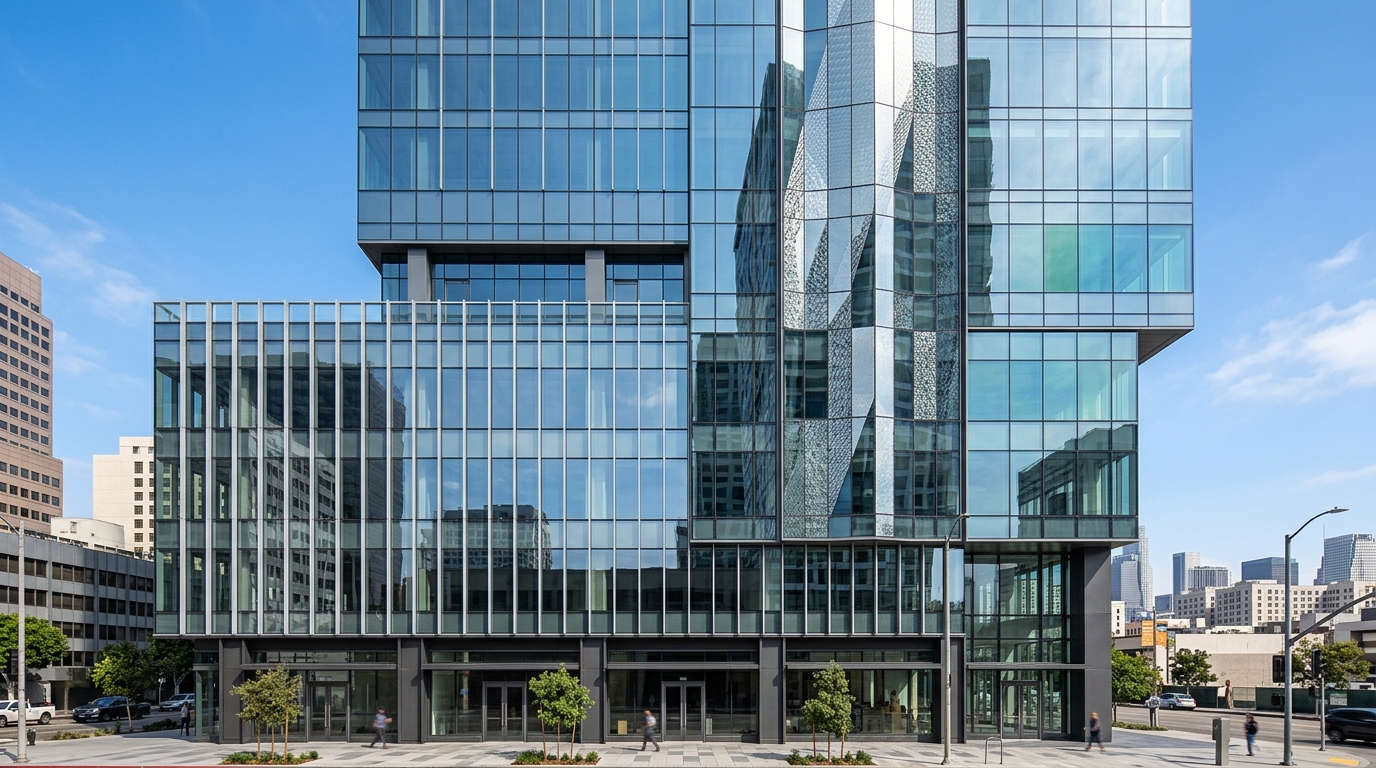
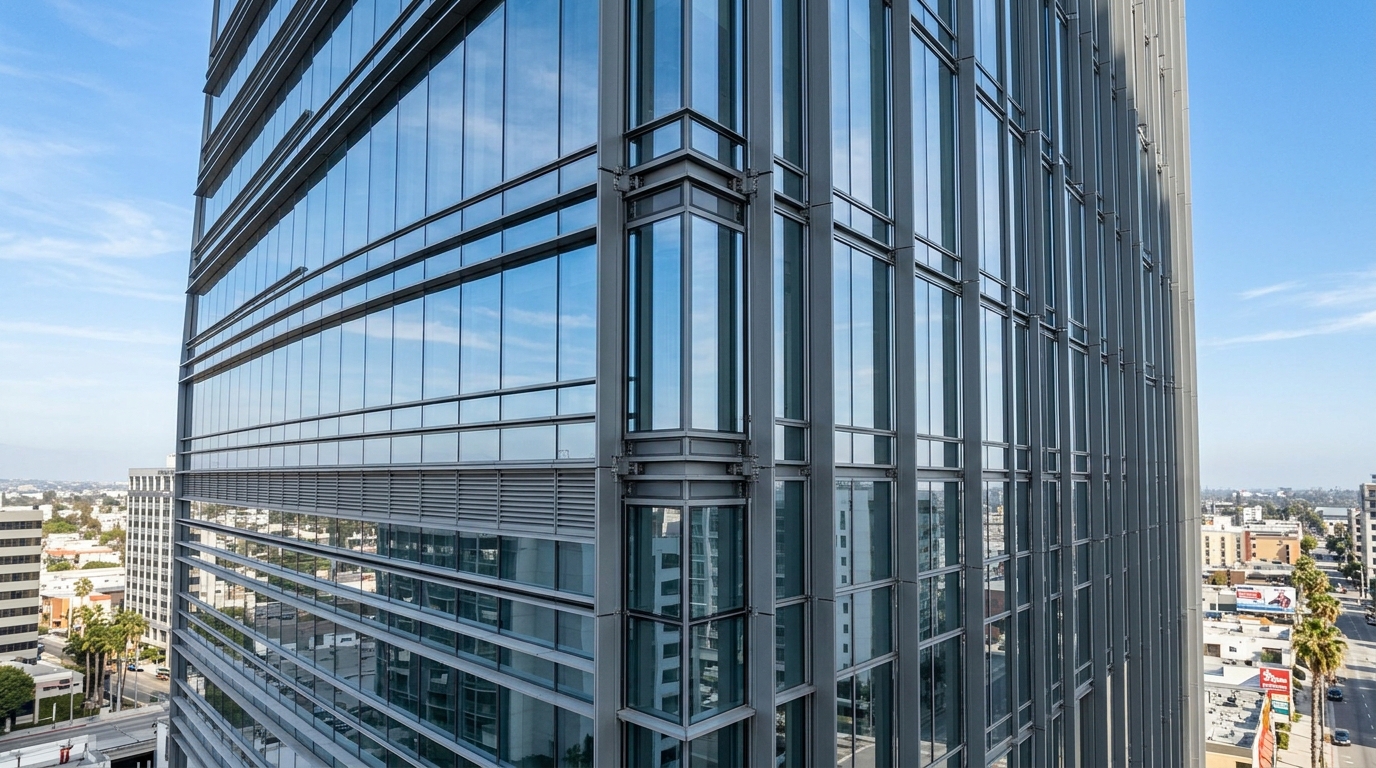
- Remove existing glass and framing, install new curtain wall or storefront system
- Most expensive but provides the best long-term performance
- Required when the framing system is structurally compromised or the building is changing occupancy type
4. Interior Storm Glazing
- Add a secondary glazing layer to the interior side of existing windows
- Non-invasive option for historic buildings or budget-constrained projects
- Can improve STC (sound) and U-factor without altering the exterior appearance
Energy Upgrade Incentives
Replacing outdated single-pane or early double-pane glass with modern Low-E IGUs can significantly reduce HVAC costs. Several incentive programs exist:
- California Title 24 compliance may be triggered by replacement projects, but meeting the new standards qualifies the building for better energy ratings
- Utility rebate programs through SCE, LADWP, PG&E, and SRP (Arizona) offer per-square-foot rebates for qualifying glazing upgrades
- PACE financing (Property Assessed Clean Energy) allows commercial building owners to finance energy upgrades through property tax assessments with no upfront capital
Ask your glazing contractor whether your replacement project qualifies for any of these programs, the savings can offset 10-20% of project costs.
Minimizing Tenant Disruption
Commercial glass replacement in an occupied building requires careful planning:
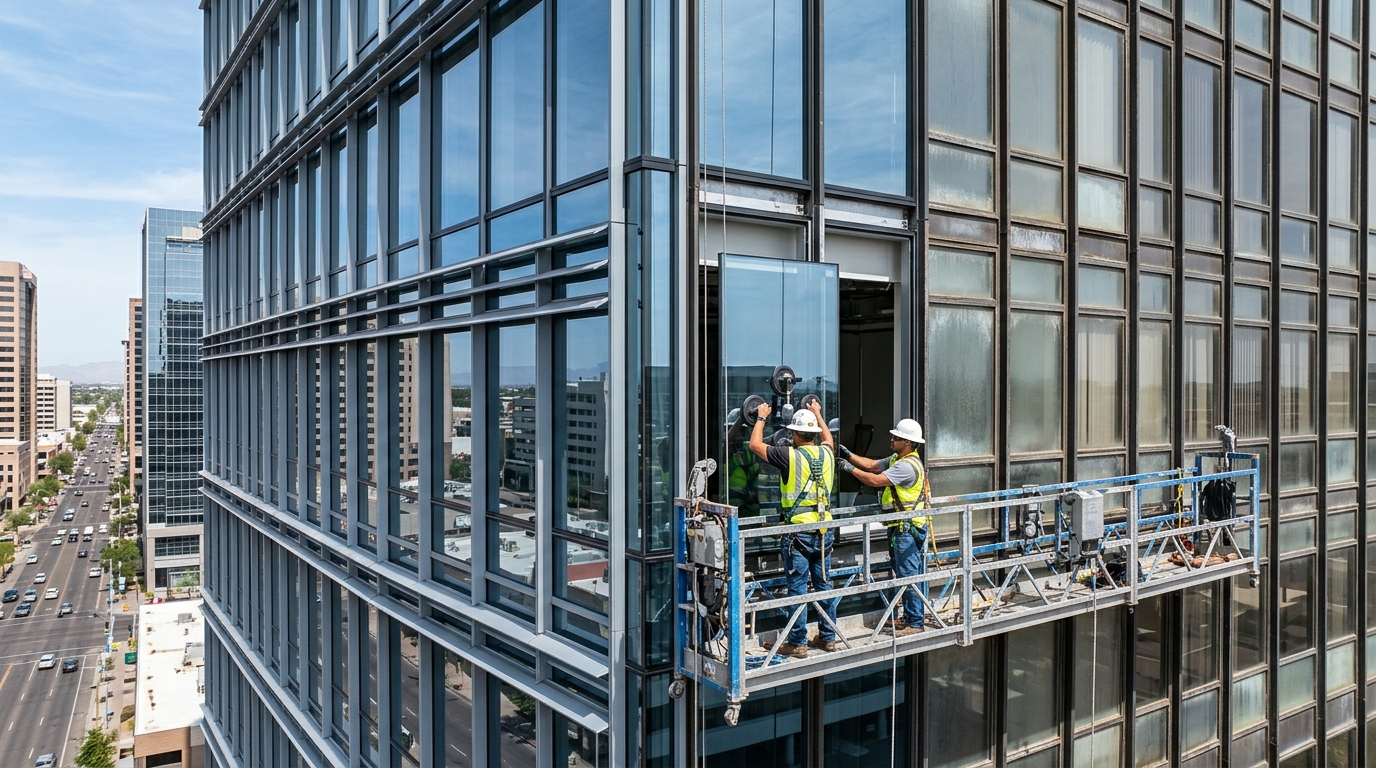
Schedule strategically. Work floor-by-floor or facade-by-facade. For retail tenants, schedule during off-hours or slow seasons. For office tenants, coordinate with building management to minimize noise during business hours.
Communicate proactively. Give tenants at least 2 weeks' notice with a clear schedule. Explain what to expect, noise levels, temporary barriers, and any access restrictions.
Protect interiors. Professional glazing contractors will install interior protection (drop cloths, temporary barriers) before removing any glass. At Ramos Industries, interior protection is standard practice on every occupied-building project.
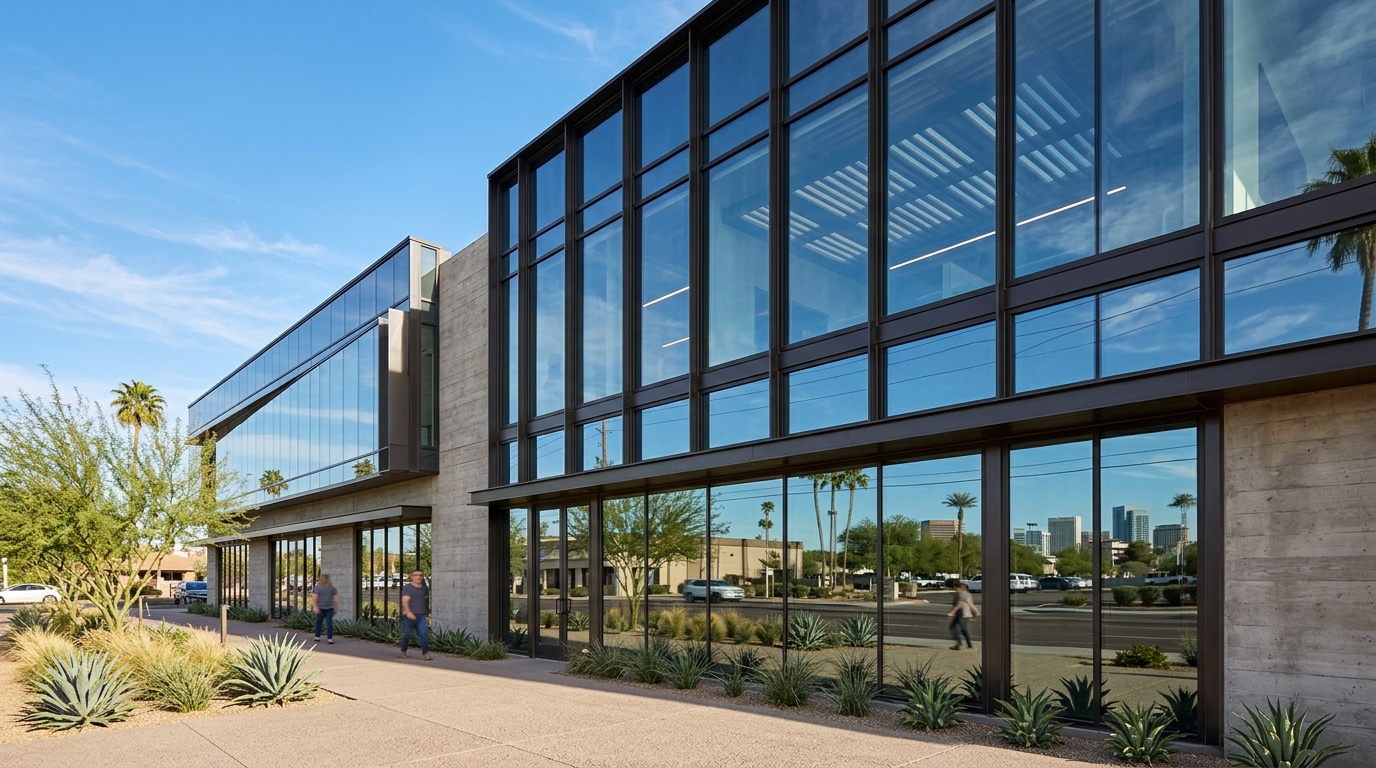
Plan for weather. In Southern California and Arizona, extreme heat can affect installation schedules and sealant cure times. Your contractor should have a weather contingency plan.
How to Select a Glazing Contractor for Replacement Work
Not every glass company is equipped for commercial replacement projects. Look for:
- Proper licensing, In California, a C-17 Glazing Contractor license is required. In Arizona, an ROC license is needed.
- Commercial experience, Ask for references from similar replacement or retrofit projects, not just new construction.
- Insurance and bonding, Verify general liability, workers' compensation, and any bonding requirements for your project size.
- In-house crews, Companies that subcontract field labor have less control over quality and scheduling.
Plan Your Replacement Project
Ramos Industries has completed hundreds of commercial glass replacement and retrofit projects across California and Arizona, from single-floor tenant improvements to full-building curtain wall replacements. Contact us for a free assessment of your building's glazing condition, or call (323) 262-5586.
Licensed in California (C-17 #1034872) and Arizona (ROC #343677). Over 35 years of commercial glazing experience.