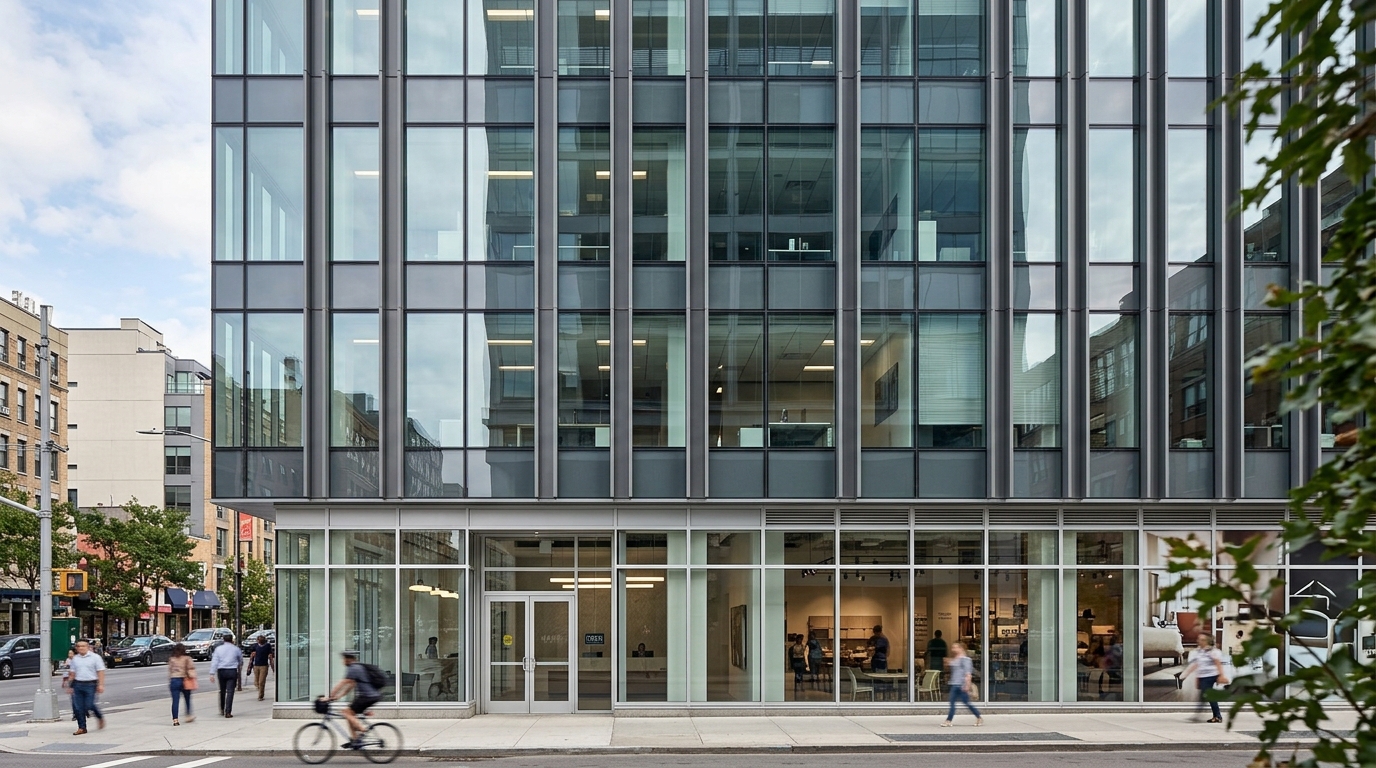
Curtain Wall vs. Storefront: Which System for Your Commercial Project
Choose storefront for ground-level, single-story openings up to roughly 10 ft of glazing height, entrances, retail frontage, lobbies, where the system is supported floor-to-head and not carrying multi-floor wind load. Choose a curtain wall when the aluminum-and-glass skin spans multiple floors, hangs off the structure, and must engineer significant wind, seismic, and deflection loads. The dividing line is structural span and performance, not appearance, both can look like "a wall of glass," but they are engineered, tested, and priced differently.
How the two systems carry load
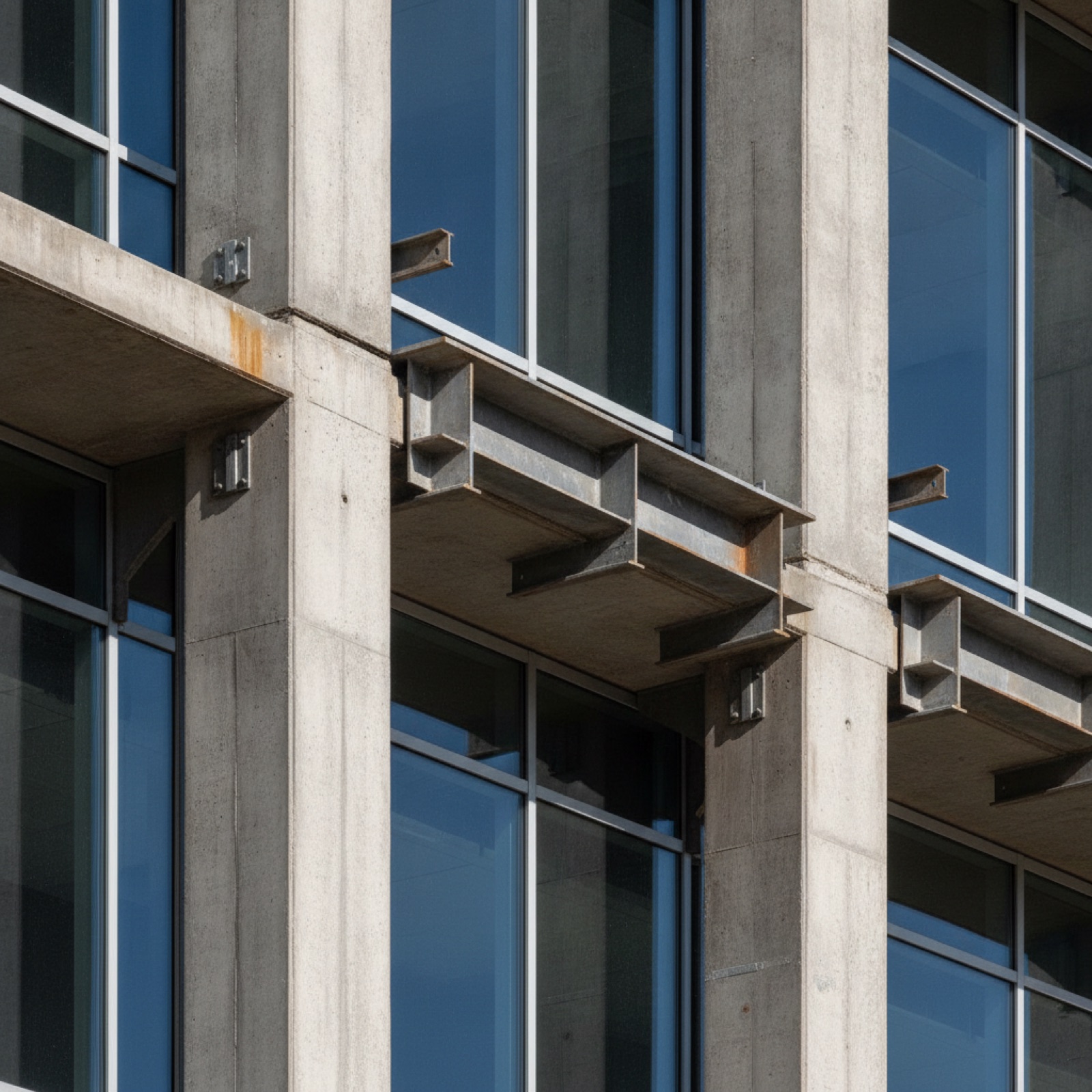
A storefront is a non-load-bearing framing system installed between the floor slab and the structure above, typically with 1-3/4" or 2" sightline mullions and center-set glazing. It's designed for lower spans and lighter wind pressures, which is why you see it at street level. A curtain wall is a self-supporting facade that spans floor-to-floor (or floor-to-spandrel-to-floor) and transfers its own dead load plus wind and seismic load back to the building structure through anchors. Curtain wall mullions are deeper (often 6", 7-1/2", or more) precisely because they're engineered for deflection limits like L/175 or L/240 over taller spans.
The practical tell: if the assembly stacks across two or more floors and needs spandrel panels to conceal the slab edge, you're in curtain wall territory.
Performance and testing
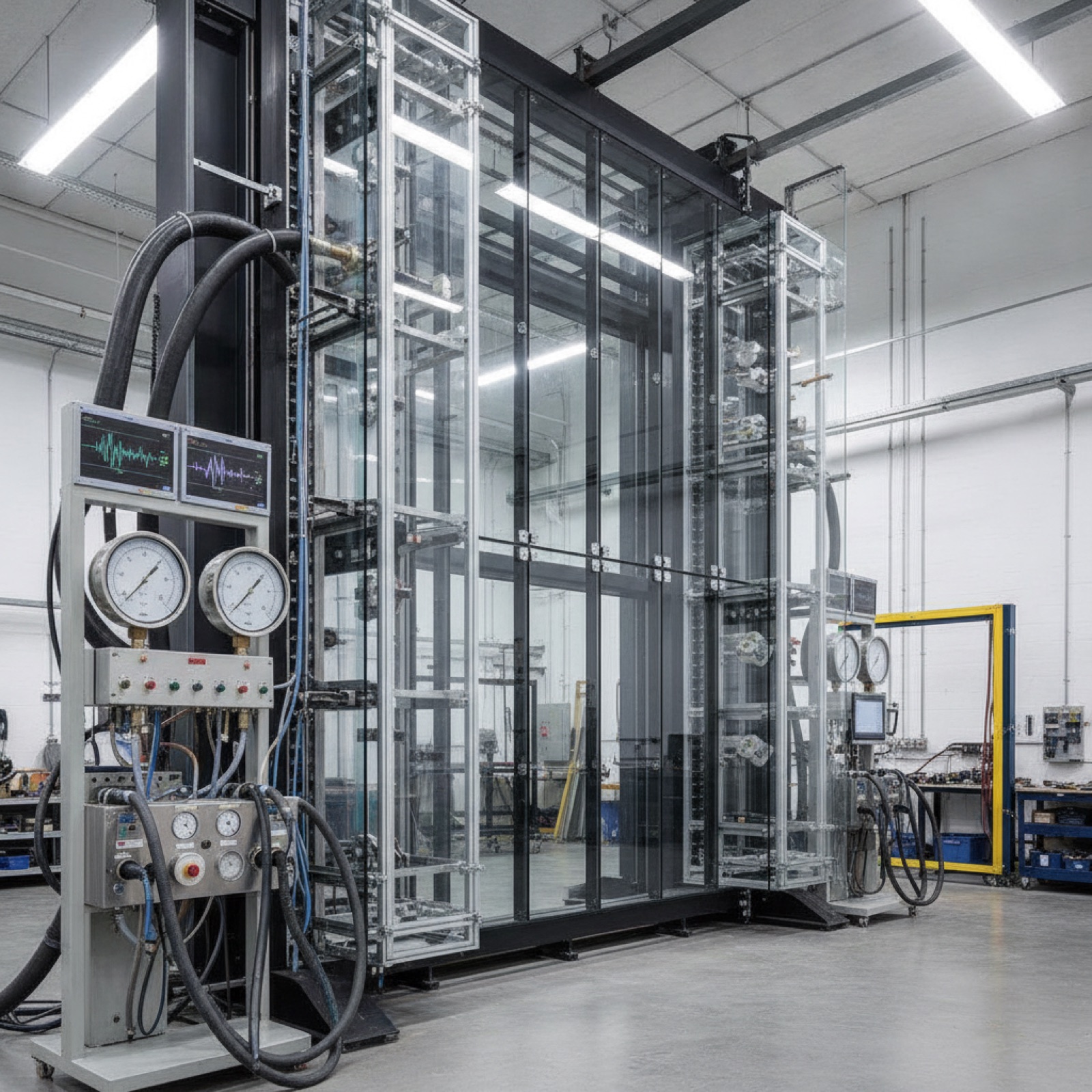
Both systems are validated against the same family of AAMA/ASTM standards, but the pass thresholds differ because the loads differ:
| Trait | Storefront | Curtain Wall |
|---|---|---|
| Typical span | Single story, ≤ ~10 ft | Multi-story, floor-to-floor |
| Mullion depth | 1-3/4" to 4-1/2" | 6" to 7-1/2"+ |
| Air infiltration (ASTM E283) | Tested, moderate | Tested, tighter on premium systems |
| Water penetration (ASTM E331) | Tested | Tested at higher pressures |
| Structural load (ASTM E330) | Lower design pressure | Higher design pressure + deflection limits |
| Field water test | AAMA 501.2 (nozzle) | AAMA 501.2 / 502 |
| Glazing | Captured, center-set | Captured or structural silicone |
| Cost per sq ft | Lower | Higher |
For both, IBC safety-glazing rules apply at hazardous locations (doors, sidelites, low glazing), and California Title 24 drives the insulating glass spec, Low-E coatings and warm-edge spacers to hit the project's required SHGC and U-factor. A typical compliant commercial IGU lands near a 0.25 SHGC and ~0.36–0.45 U-factor depending on framing and climate zone, but the energy model governs the actual number.
Cost, lead time, and where each wins
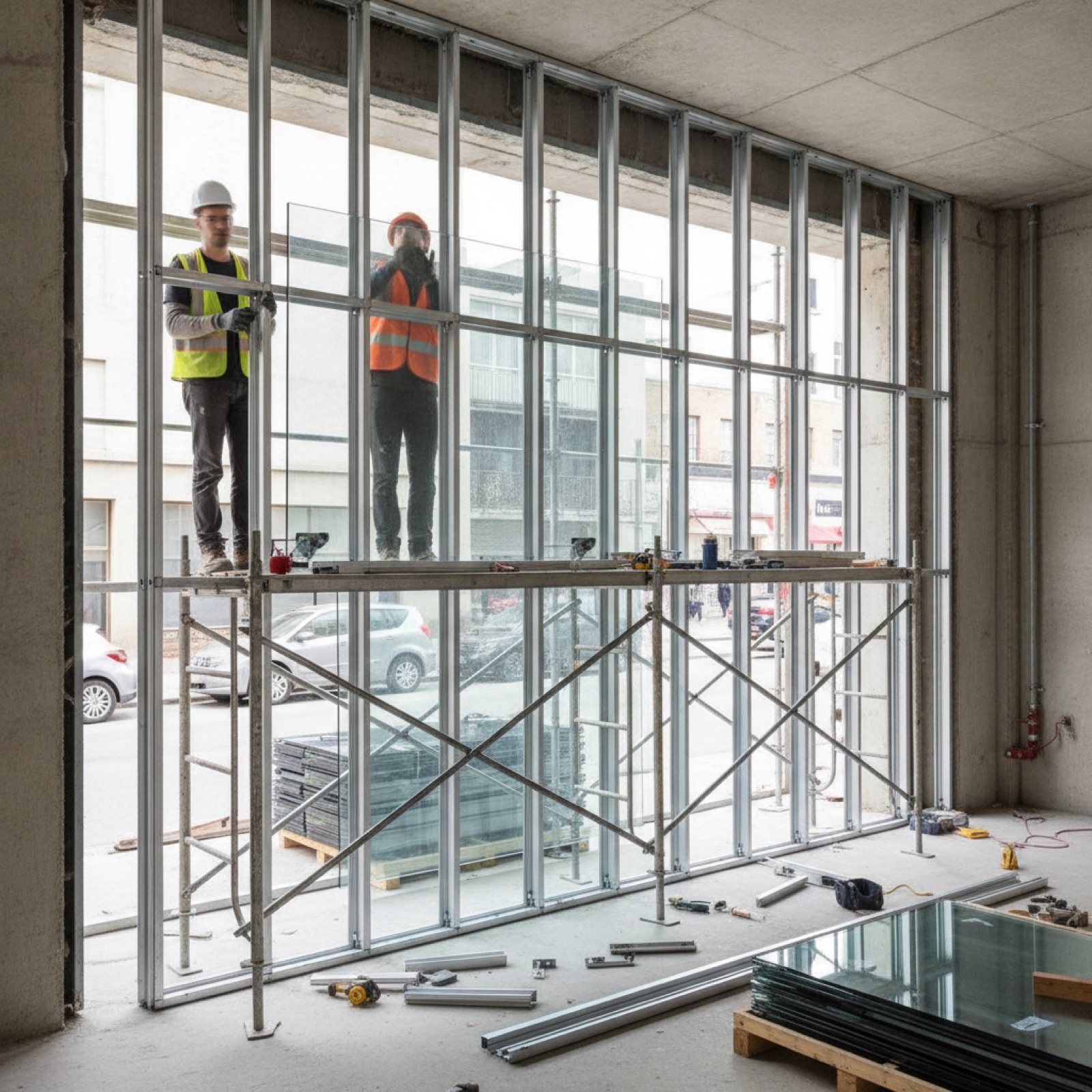
Storefront is the value play: shallower extrusions, simpler anchoring, faster install, and shorter lead times make it the right call for retail, restaurants, medical-office entries, and tenant improvements. Curtain wall costs more per square foot and carries longer engineering and procurement timelines, but it's the only correct answer for multi-story facades, high wind exposure, or where deflection and thermal performance must be guaranteed across floors.
A common hybrid: curtain wall above for the upper floors, storefront at grade for the entrance and retail base. Mixing them deliberately controls budget without compromising performance where it matters.
How Ramos approaches the call

Ramos Industries doesn't guess at this, we issue written submittals that show framing depths, glass makeup, thermal values, and the AAMA/ASTM basis before fabrication. As a licensed commercial glazing contractor (CA C-17 #1034872, AZ ROC #343677) with 35+ years in the field since 1987 and W-2 installers (not day labor), we engineer the system to the actual wind zone and Title 24 path, not a catalog default.
Request a Glazing Bid and we'll spec storefront, curtain wall, or the right hybrid for your envelope, or grab the free Commercial Glazing Spec Kit to compare systems before you finalize the design.
Frequently Asked Questions
Can storefront be used above the ground floor?
Sometimes, on low-rise buildings with light wind loads and floor-supported framing, but once the glazing spans floor-to-floor or carries multi-story wind and deflection loads, a curtain wall is the correct engineered system.
Is curtain wall always more expensive than storefront?
Per square foot, yes, deeper extrusions, heavier anchoring, and longer engineering timelines cost more. But it's the only system rated for multi-story spans, so the comparison only matters where both are technically viable.
Which system meets Title 24 better?
Neither system inherently wins, Title 24 compliance comes from the insulating glass (Low-E, warm-edge spacer) and the thermal break in the framing. Both can hit the required SHGC and U-factor when specced and modeled correctly.
Related Articles

How to Prequalify a Glazing Subcontractor
A GC's checklist to prequalify a commercial glazing sub: license, insurance, W-2 crews, system experience, AAMA/ASTM test track record, and warranty.
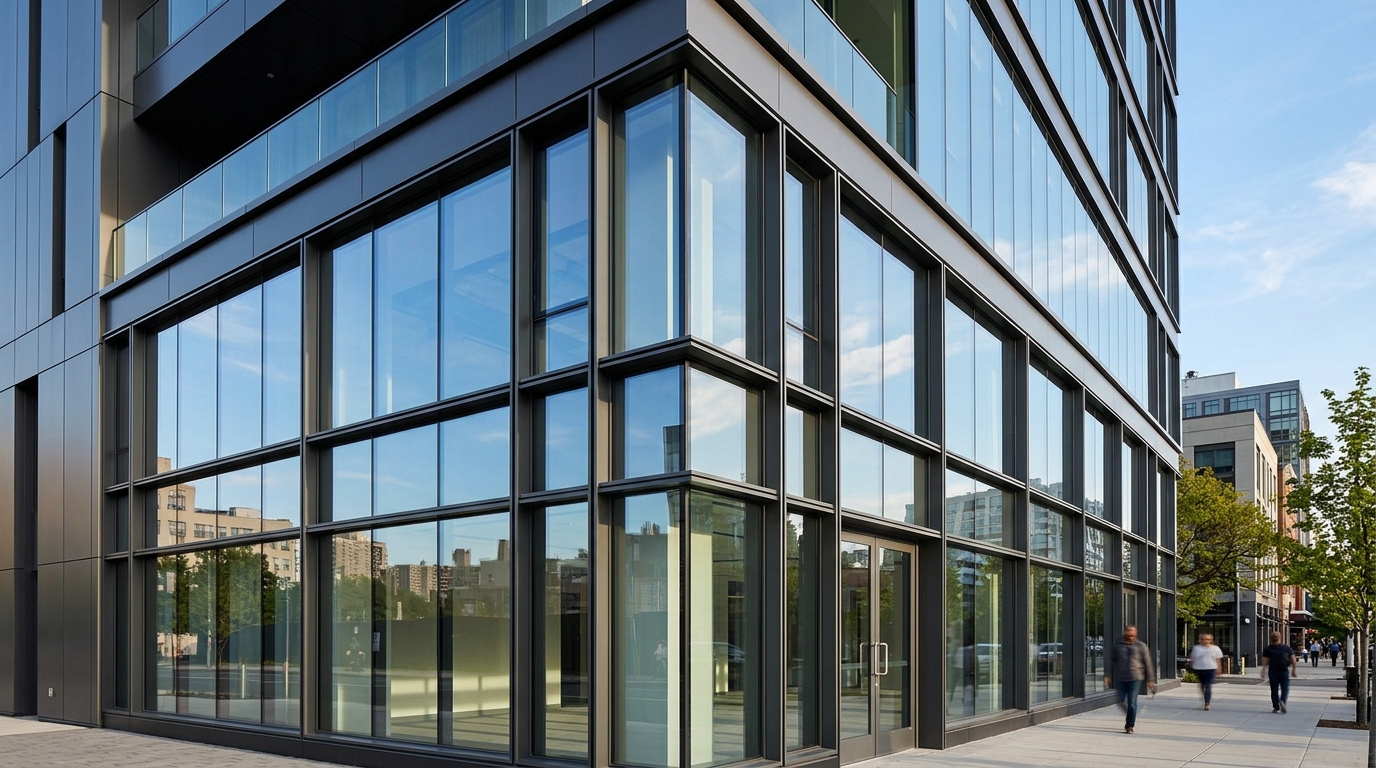
Aluminum Storefront Systems Compared (Center-Set, Offset, Flush)
Center-set vs. offset vs. flush aluminum storefront, glazing plane, sightlines, water management, and where each system fits. Spec guidance for GCs.
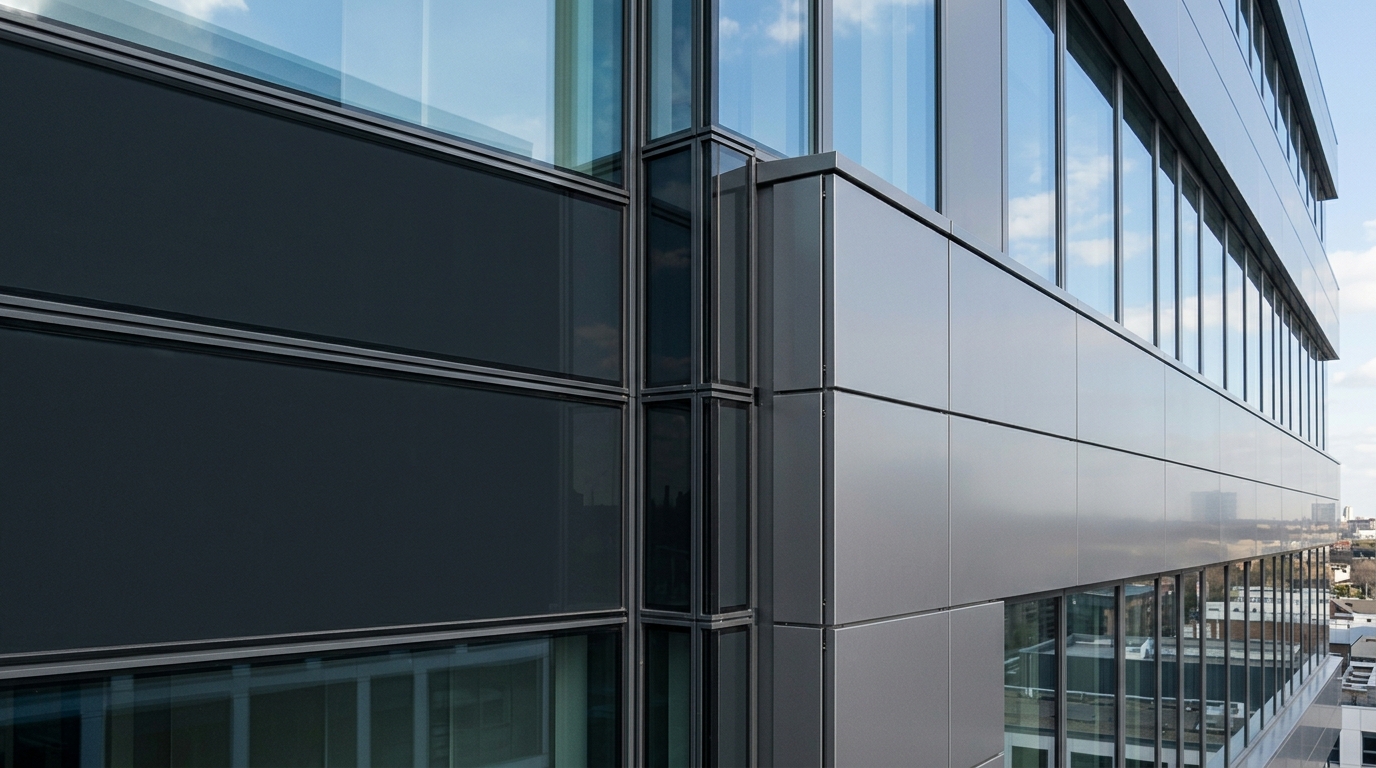
Spandrel Glass and Aluminum Composite (ACM) Panel Integration
How spandrel glass and ACM panels integrate in curtain wall and storefront facades, back-pan vs. opacified options, thermal, fire, and spec guidance.
We use cookies and similar technologies to improve your experience on our website.