Unitized vs. Stick-Built Curtain Wall: Cost, Lead Time & When to Use Each
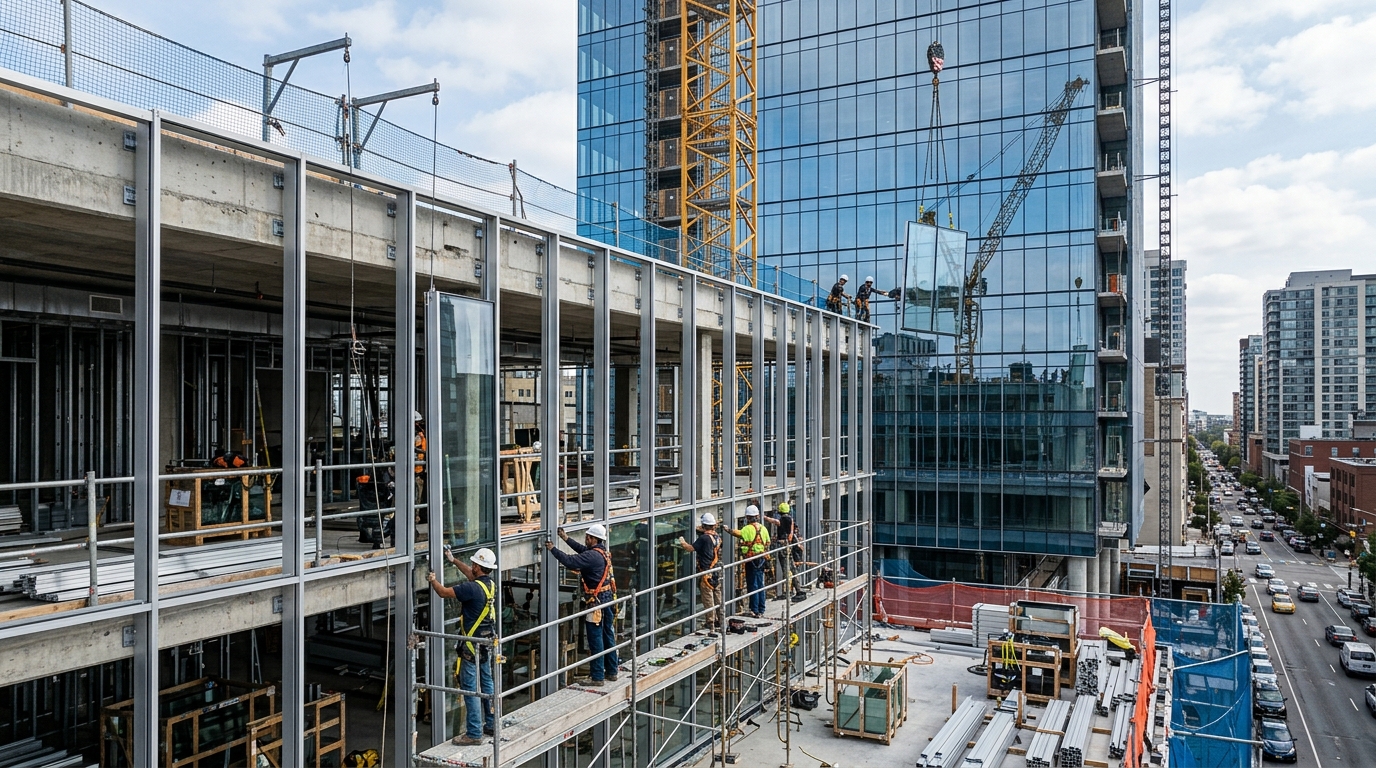
Choose stick-built curtain wall for low- to mid-rise projects, smaller facades, and schedules that can absorb piece-by-piece field assembly, it has lower up-front tooling cost and more on-site flexibility. Choose unitized for taller buildings, large repetitive facades, and compressed schedules, factory-built panels install far faster, with tighter quality control, but require longer lead time and bigger crane/logistics planning up front. The decision is driven by building height, facade size, and schedule pressure more than by raw material cost.
What actually differs
In stick-built, individual mullions, glass, and pressure plates ship loose and the wall is assembled and glazed piece by piece on the scaffold or from the floor plate. It's the traditional method: low fabrication overhead, easy to adjust in the field, but labor-intensive and weather-exposed during install.
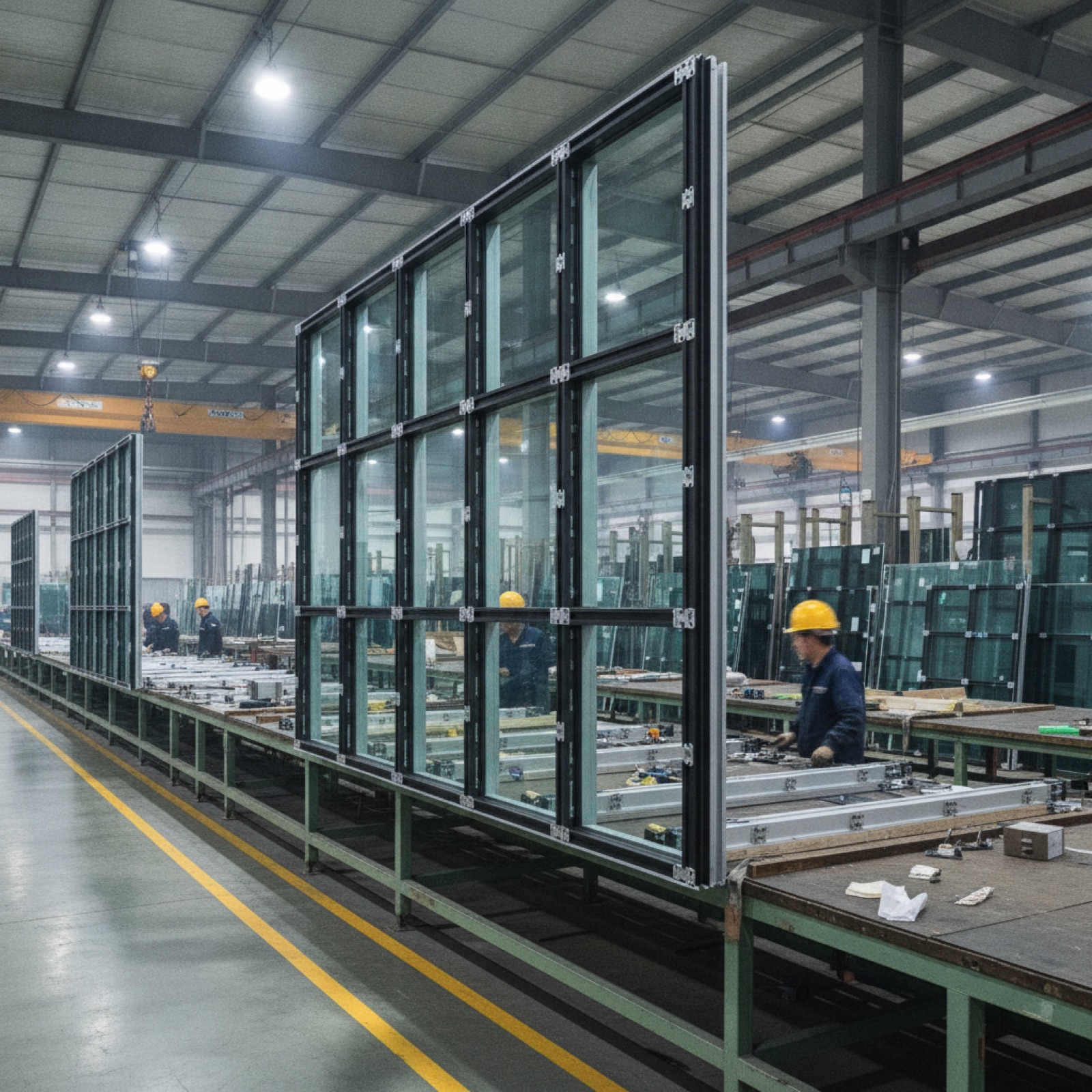
In unitized, complete framed-and-glazed panels, often one floor tall and one bay wide, are assembled in a controlled shop, shipped to site, and hung off pre-set anchors. Field labor drops dramatically, weather exposure shrinks, and the critical glazing happens indoors under QC. The trade-off is that engineering, fabrication, and shop time push lead times longer, and once panels are built, field changes are expensive.
Cost, lead time, and install speed

| Factor | Stick-Built | Unitized |
|---|---|---|
| Up-front tooling/engineering | Lower | Higher |
| Material cost per sq ft | Often lower | Often higher |
| Field labor | High (piece assembly) | Low (panel hanging) |
| Install speed | Slower | Fast, multiple floors/week |
| Lead time | Shorter | Longer (shop fabrication) |
| Field flexibility | High | Low (locked at fabrication) |
| QC environment | Field (weather-exposed) | Factory (controlled) |
| Best fit | Low/mid-rise, small facades | High-rise, large repetitive facades |
| Crane/logistics demand | Lower | Higher |
The headline: unitized wins on schedule and quality control, stick-built wins on lower up-front cost and adaptability. On a tall tower with a tight schedule, the faster install and reduced field labor of unitized often offset its higher material cost. On a three-story building with an irregular facade, stick-built is usually the leaner choice.
Performance and testing, same standards, different risk profile
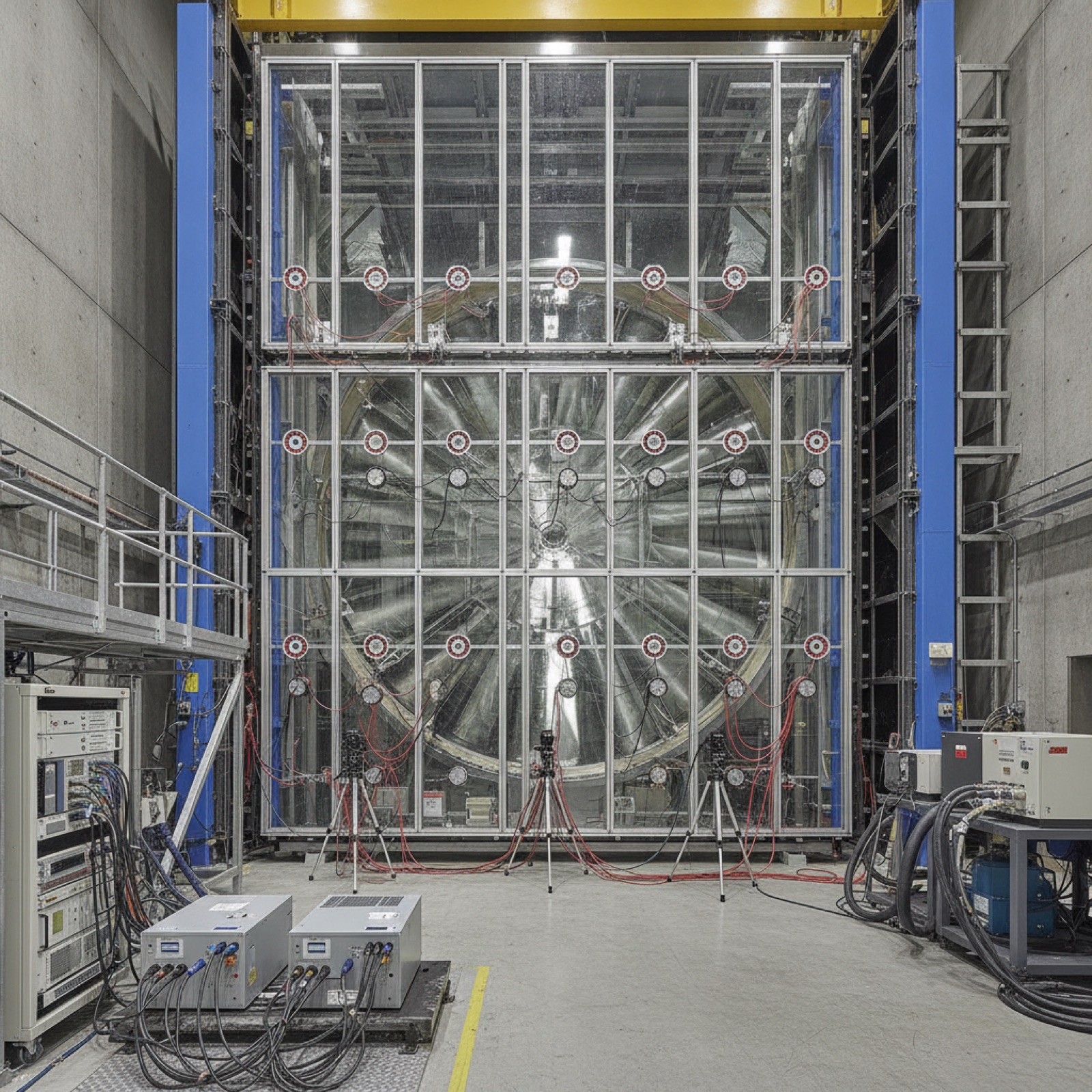
Both methods are validated against the same suite: ASTM E283 (air infiltration), ASTM E331 (static water penetration), ASTM E330 (structural / wind load), with field verification by AAMA 501.2 (field water spray) and lab mock-ups per AAMA 501. Both must meet California Title 24 through the insulating-glass spec, Low-E coatings and warm-edge spacers tuned to the required SHGC and U-factor, and IBC safety-glazing at hazardous locations.
The difference is where quality is controlled. Unitized panels are factory-glazed, so the weatherseal and structural-silicone joints (if used) cure under controlled conditions, which generally lowers field water-test risk. Stick-built relies on field glazing quality, so installer skill and weather windows matter more to the AAMA 501.2 result.
How Ramos decides, and delivers
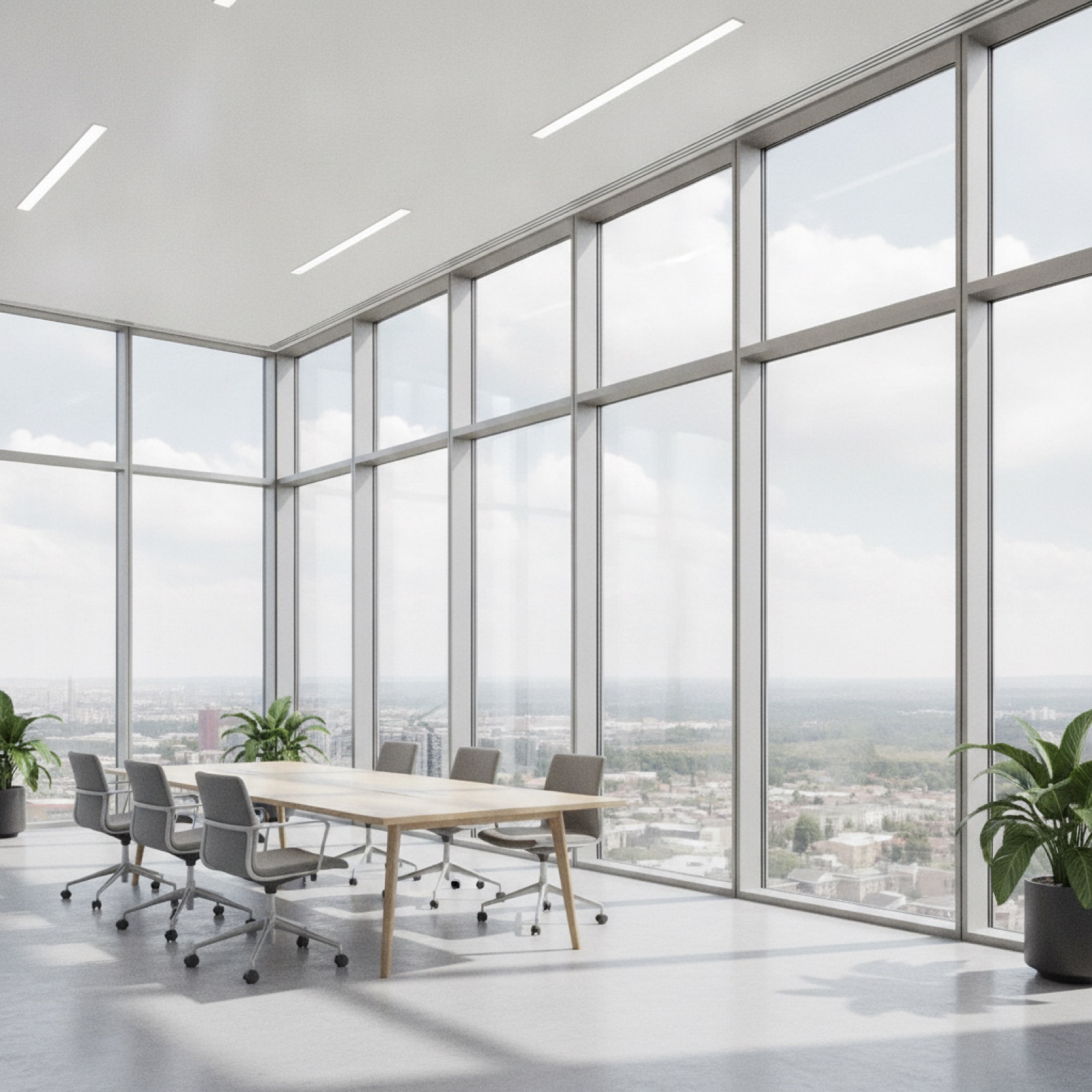
The right method falls out of the project's height, facade repetition, and schedule, not a preference. Ramos Industries scopes that trade-off explicitly in written submittals showing framing, glass makeup, anchorage, and the testing basis before anyone fabricates. As a licensed commercial glazing contractor (CA C-17 #1034872, AZ ROC #343677), 35+ years in business since 1987, with W-2 installers and warranty-backed work, we install both stick and unitized systems and sequence the logistics, crane picks, panel staging, anchor pre-setting, that unitized in particular demands.
Request a Glazing Bid for a method recommendation tied to your real schedule and elevation, or download the free Commercial Glazing Spec Kit to weigh the trade-offs before design lock.
Frequently Asked Questions
Is unitized curtain wall always faster to install?
On site, yes, factory-built panels hang quickly, often several floors per week. But total project time depends on lead time too; unitized needs longer shop fabrication up front, so it's fastest where the schedule can absorb that head start.
When does stick-built make more sense?
On low- and mid-rise buildings, smaller or irregular facades, and projects that benefit from field adaptability and lower up-front tooling cost. Stick-built also avoids the crane and panel-logistics burden that unitized requires.
Do the two methods meet different code standards?
No, both are tested to the same ASTM E283/E331/E330 and AAMA 501 standards and must meet Title 24 and IBC safety-glazing. The difference is that unitized glazing is shop-controlled, which typically lowers field water-test risk.
Related Articles
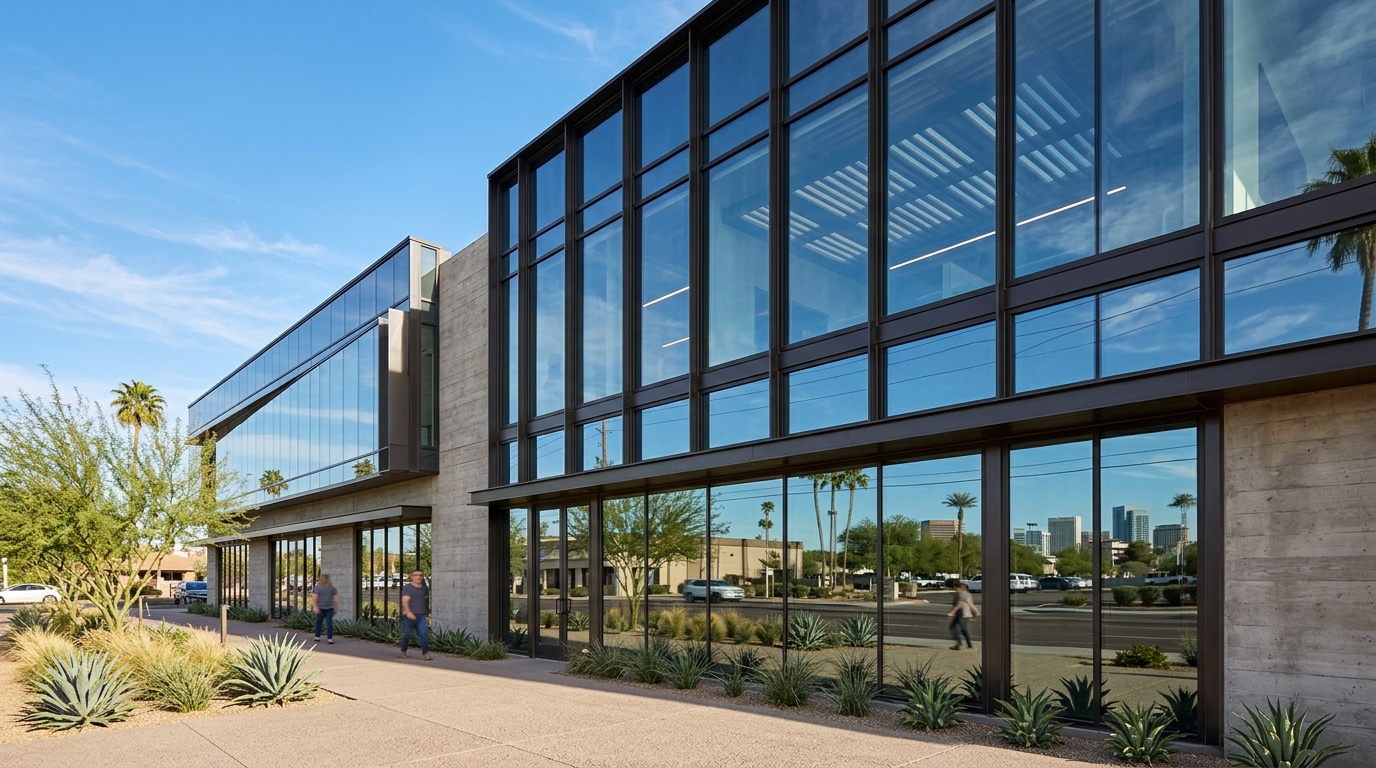
Value-Engineering Glass Without Failing Title 24
Cut glazing cost without failing Title 24: where to value-engineer glass and framing safely, and which SHGC/U-factor moves quietly break compliance.

Commercial Glazing Lead Times in SoCal by System (2026)
2026 commercial glazing lead times in Southern California by system, storefront, curtain wall, unitized, IGUs, and specialty glass, plus what drives delays.
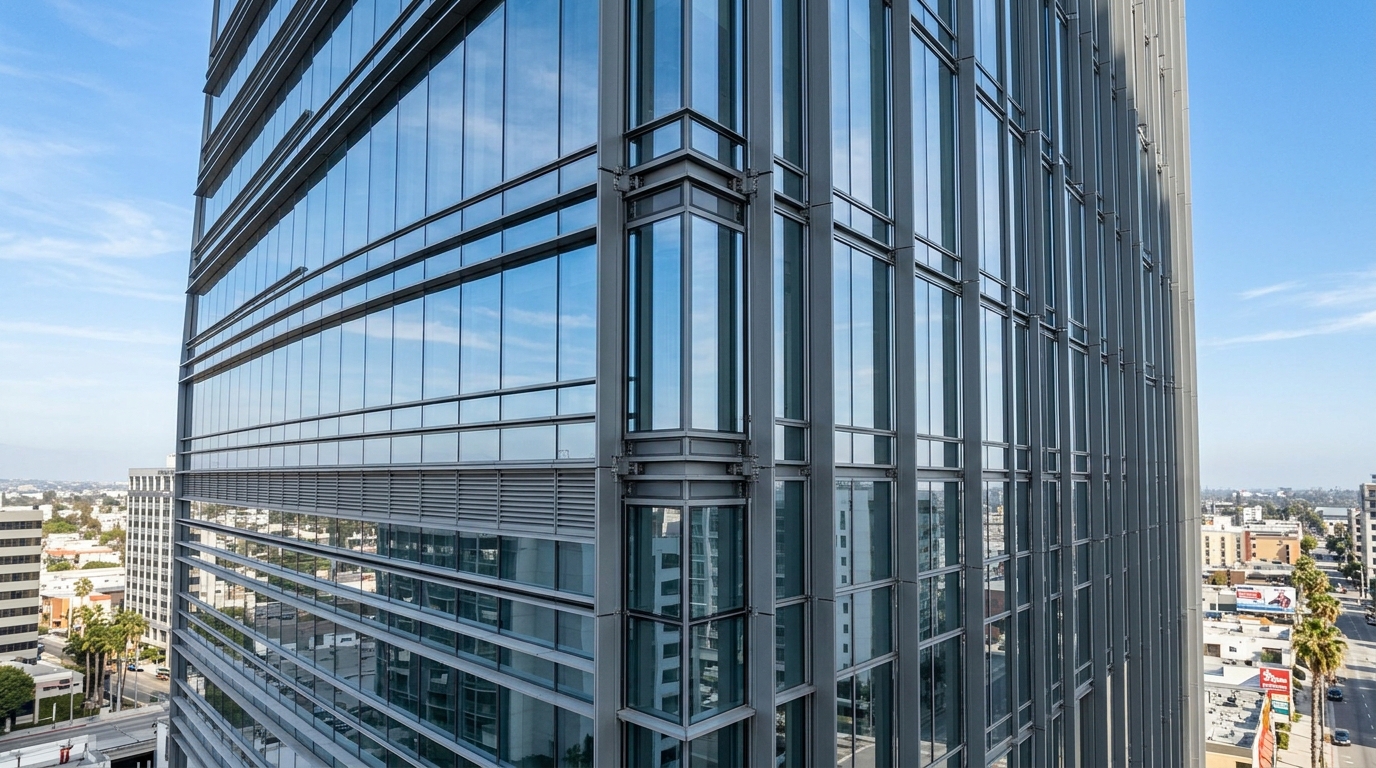
Seismic and Deflection Requirements for SoCal Curtain Wall
Seismic drift and deflection requirements for Southern California curtain wall, AAMA 501.4, L/175 limits, glass bite, and detailing for inter-story movement.
We use cookies and similar technologies to improve your experience on our website.