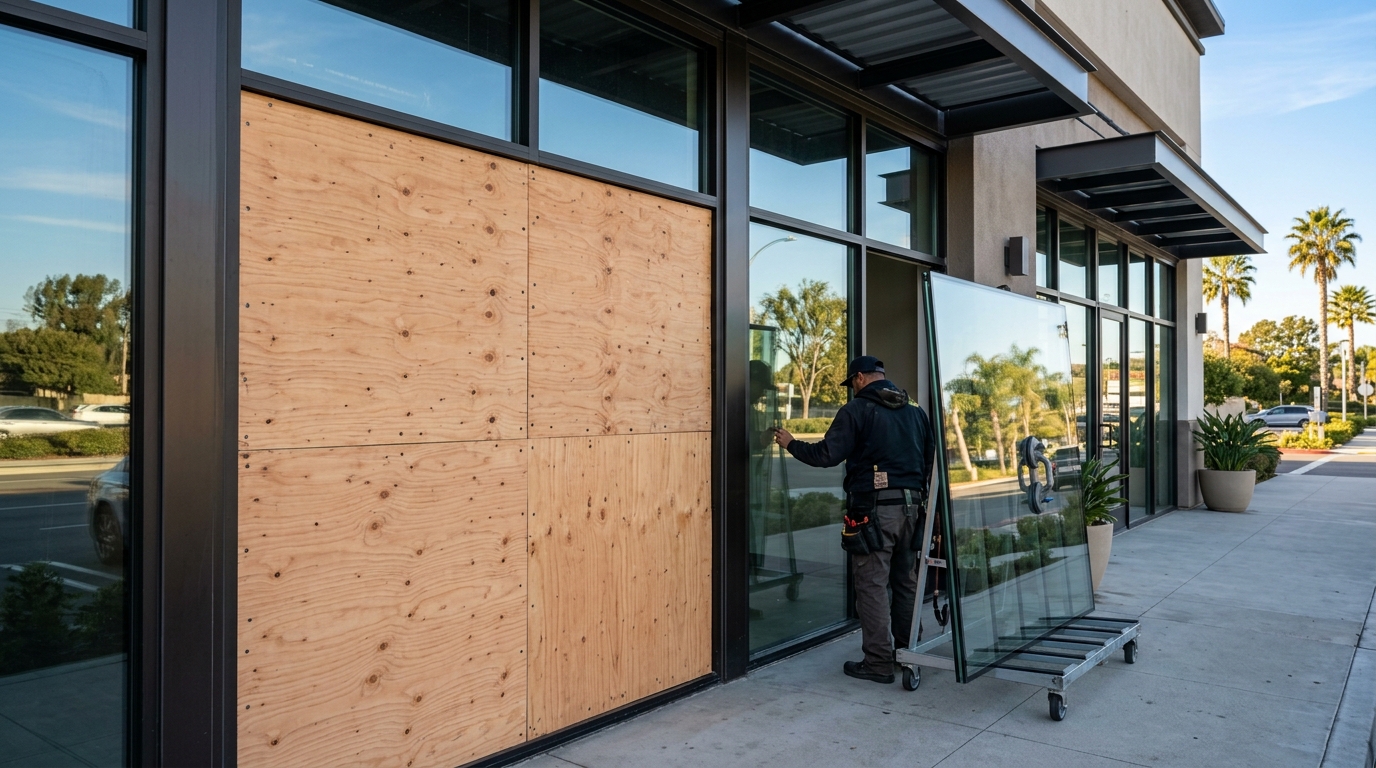
Emergency Commercial Board-Up and Glass Replacement
When a commercial storefront or curtain wall lite fails, break-in, vandalism, vehicle impact, or storm, the job runs in two phases: secure the opening now, then replace the glass right. The board-up stabilizes the building (weather, security, liability) within hours. The permanent replacement matches the original system, glass make-up, and code, tempered or laminated where safety glazing is required, the correct IGU and Low-E for energy compliance, which can take days to weeks because commercial glass is rarely off-the-shelf. Confusing the two phases is how owners end up with a plywood storefront for a month.
Phase One: Secure the Opening
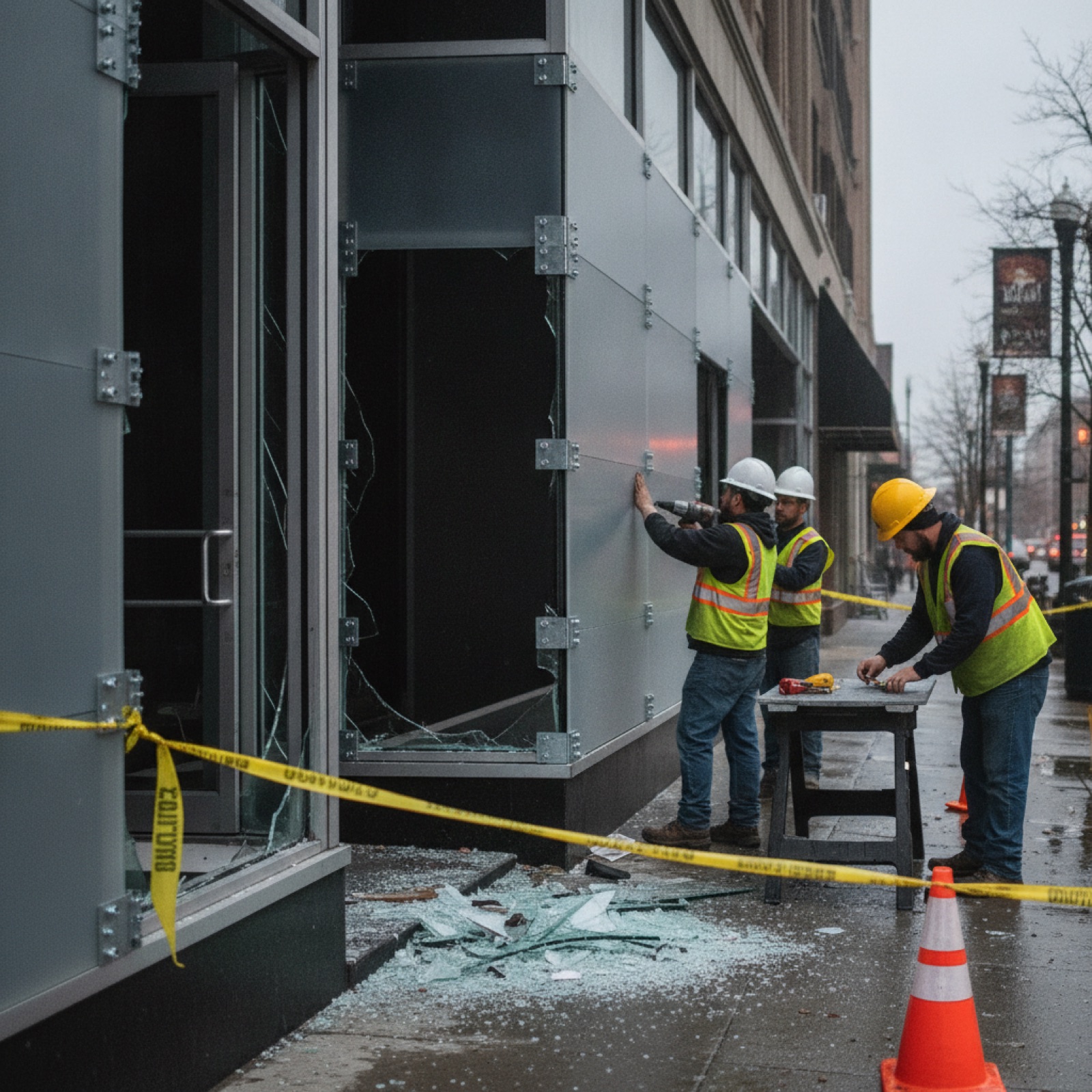
The immediate priority is a safe, dry, secure building. That means clearing hazardous broken glass, then closing the opening with plywood or polycarbonate board-up sized and fastened to hold against weather and intrusion. For a ground-floor retail storefront, security and appearance both matter; for an upper-floor curtain wall lite, fall protection and weather are the drivers. A proper board-up also protects the existing frame, gasket pockets, setting blocks, and SSG bite, so the permanent reglaze drops into an undamaged opening.
Phase Two: Match the Glass and the Code
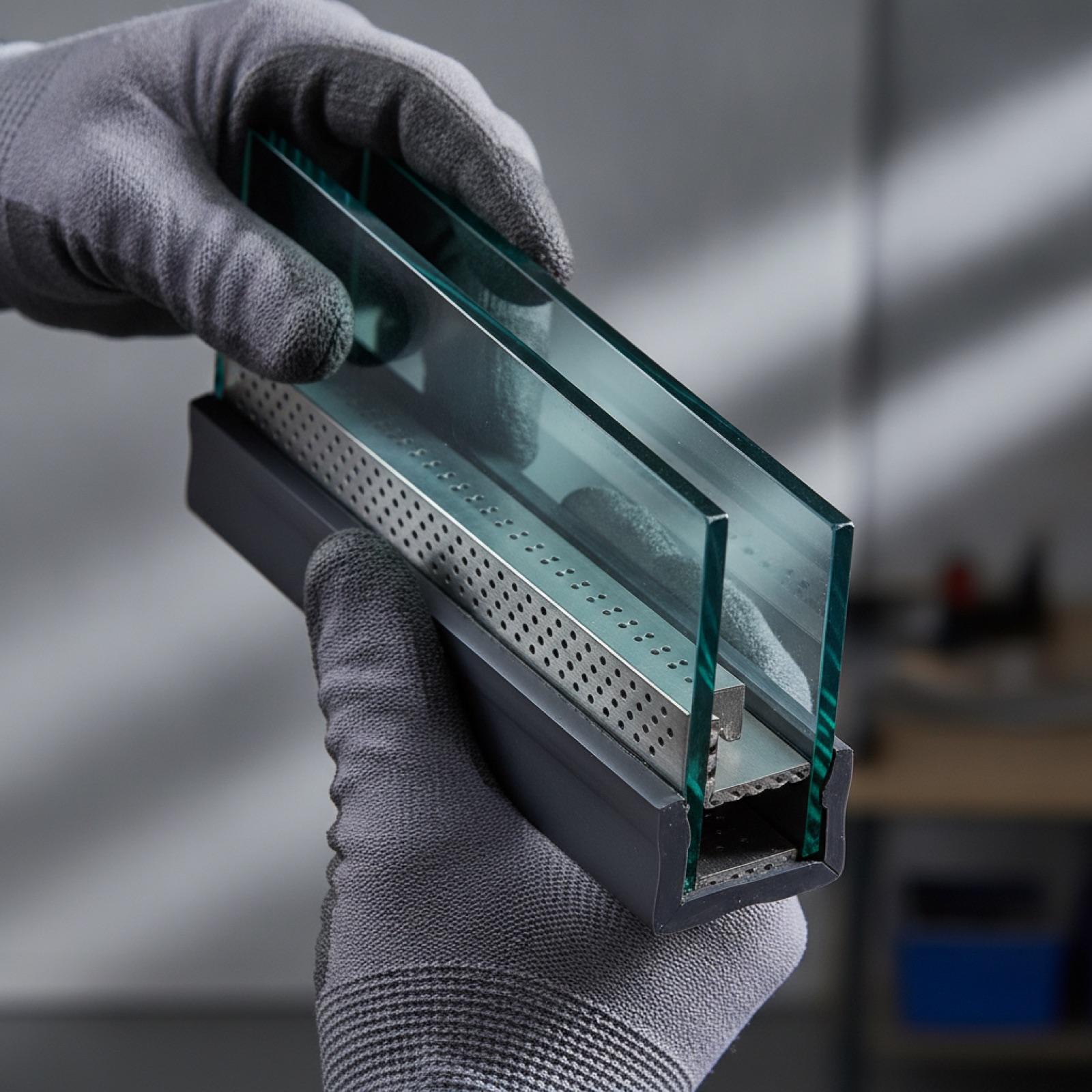
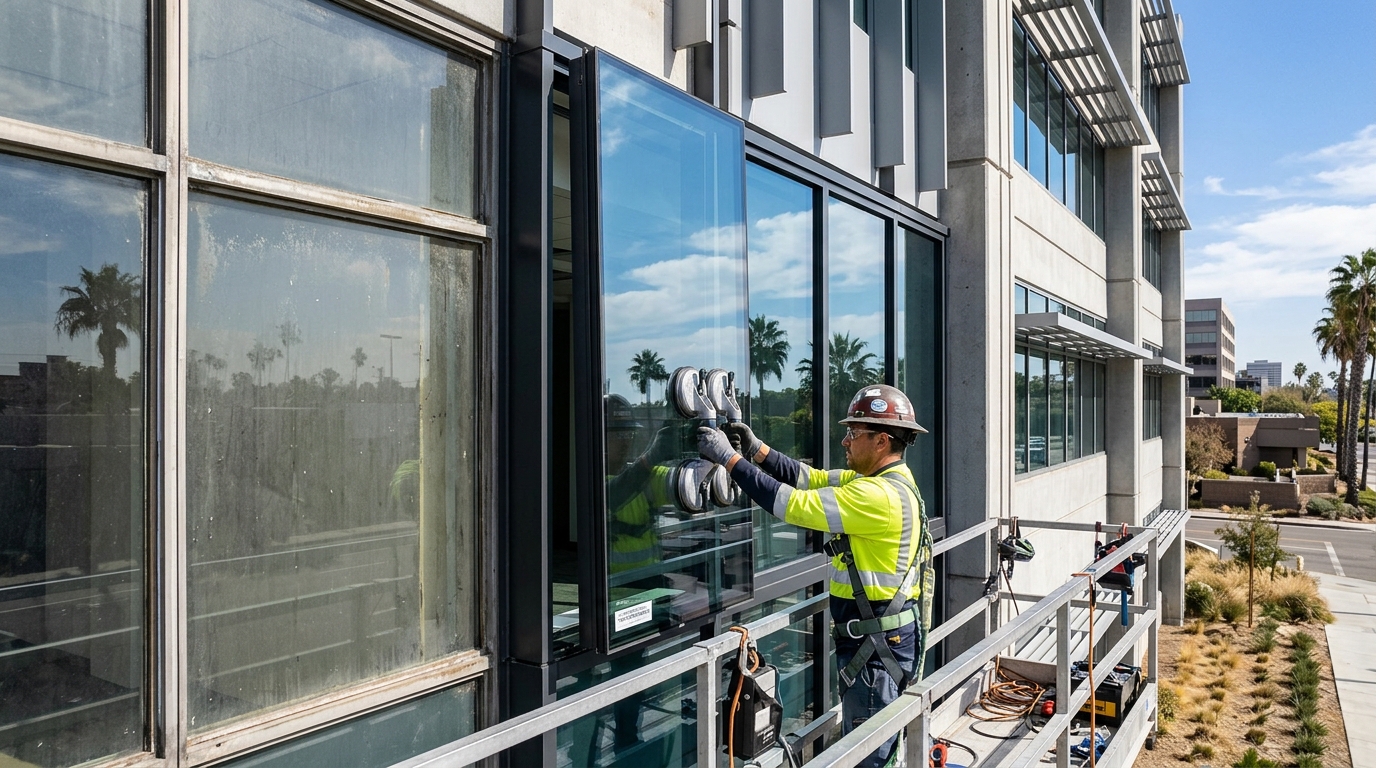
The permanent fix is only correct if it matches the original engineering. Commercial glass is fabricated to the opening, annealed, heat-strengthened, fully tempered, or laminated, with a specific Low-E coating and IGU build-up. Safety glazing locations under the IBC (hazardous locations: doors, sidelites, low glazing) must be tempered or laminated, full stop. And in California the replacement IGU has to meet the project's Title 24 envelope numbers, so you can't just drop in clear glass and call it done.
| Phase | Goal | Typical timeline | Key spec |
|---|---|---|---|
| Board-up | Secure, weatherproof, safe | Same day / hours | Fastening, fall protection, frame protection |
| Temp glazing (optional) | Restore visibility / clear opening | 1–3 days | Single-pane stopgap, monolithic |
| Permanent reglaze | Match original system | Days–weeks | IGU + Low-E, tempered/laminated, Title 24 |
Why the Permanent Fix Takes Time
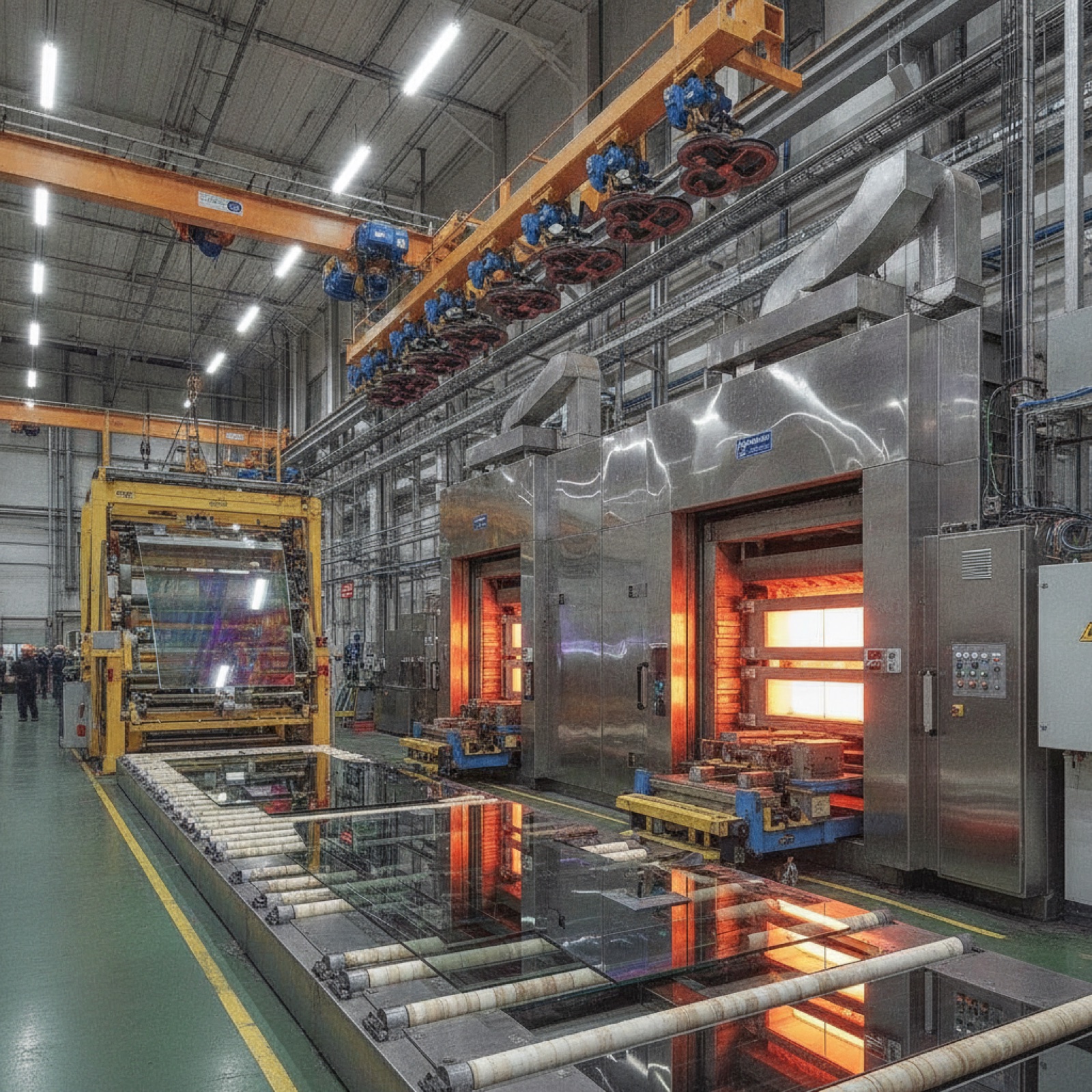
Owners are often surprised the glass isn't "in stock." A storefront IGU with a low-iron or specific Low-E coating, an oversized lite, or a non-standard thickness is fabricated to order. Tempered glass cannot be cut after tempering, so the size must be exact before it goes through the furnace. Laminated safety glass adds autoclave time. A reputable glazier sets the right expectation up front: secured today, permanent glass on a realistic fabrication lead time, not a vague promise.
Why Ramos for Emergency Glazing
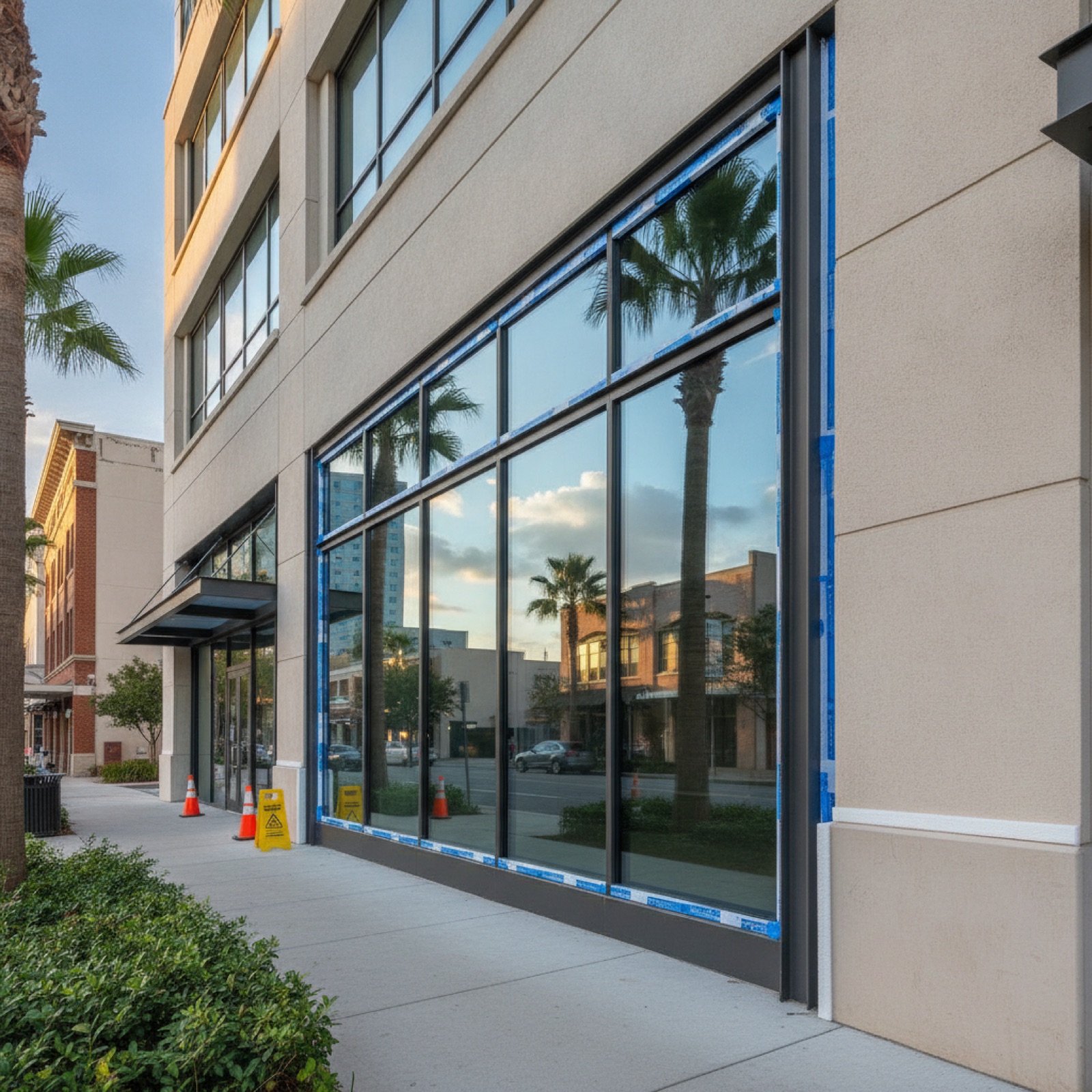
We handle both phases under one licensed contractor, so the board-up crew and the reglaze crew aren't pointing fingers at each other. Our W-2 installers protect the existing frame during board-up so the permanent fix is clean. We match the original system, specify code-compliant safety glazing and Title 24-compliant IGUs, and back the work with a warranty and written documentation. Licensed in California (C-17 #1034872) and Arizona (ROC #343677), serving SoCal and the Phoenix metro since 1987.
Got a Broken Storefront?
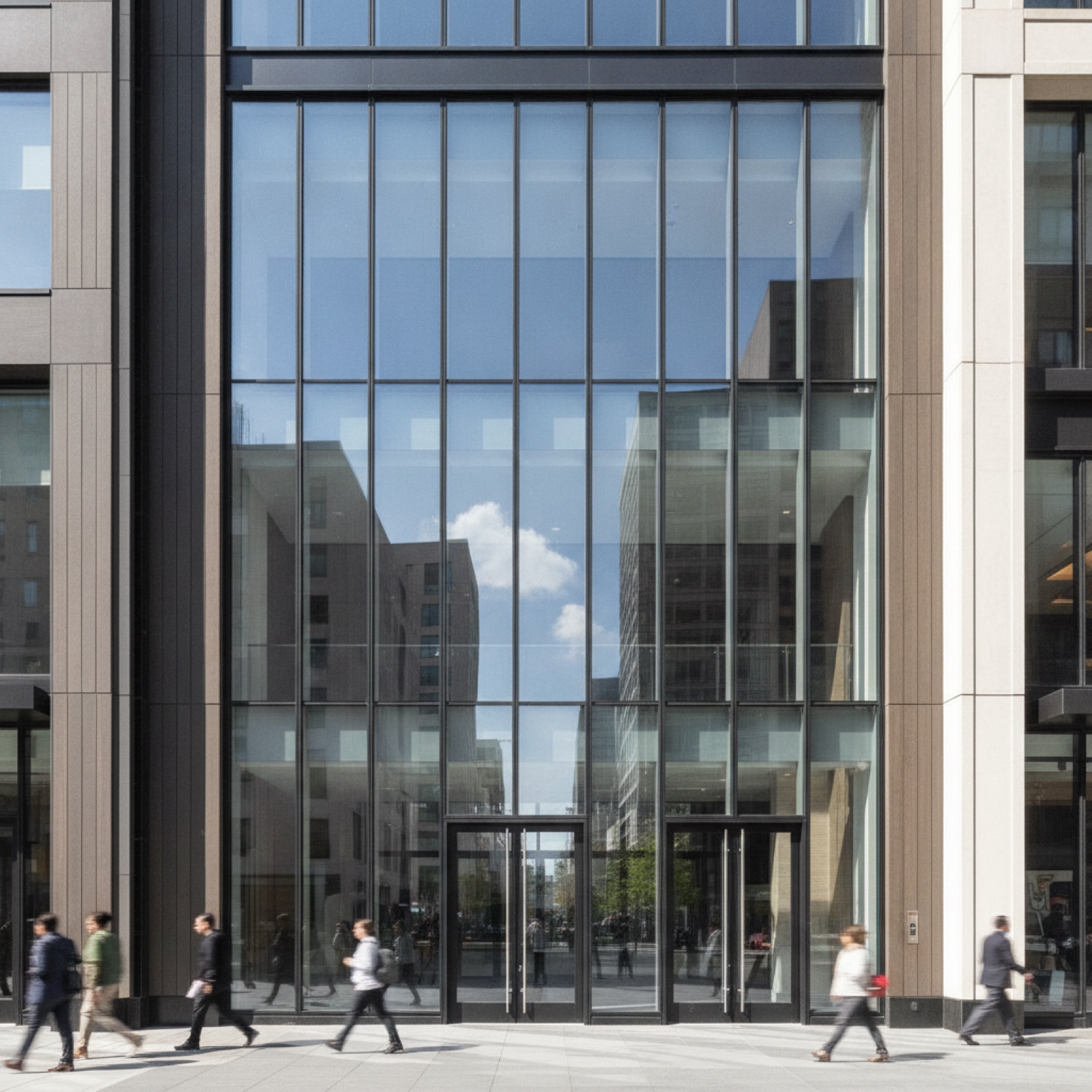
Secure it today and get the permanent glass on order with the right spec. Request a Glazing Bid for emergency board-up and replacement.
Frequently Asked Questions
How fast can you board up a broken commercial storefront?
Board-up is a same-day, often same-hours response, clearing broken glass and closing the opening with plywood or polycarbonate to secure the building against weather and intrusion. The permanent glass replacement follows on a separate, fabrication-driven timeline.
Why can't you just replace the glass the same day?
Commercial glass is usually fabricated to the opening, specific IGU build-up, Low-E coating, and often tempered or laminated safety glass that can't be cut after fabrication. Off-the-shelf single panes rarely match the original system or meet code, so the permanent fix needs a real lead time.
Does emergency replacement glass have to meet Title 24 and safety-glazing codes?
Yes. In California the replacement IGU must meet the project's Title 24 envelope numbers, and any IBC hazardous location, doors, sidelites, low glazing, requires tempered or laminated safety glass. A temporary board-up or stopgap pane is fine short-term, but the permanent fix must be compliant.
Related Services
Emergency Board Up
Immediate 24/7 response for broken glass emergencies. We secure your property quickly to prevent further damage, theft, or weather exposure.
Glass Replacement & Repair
Full service commercial glass replacement for windows, storefronts, and curtain wall systems, including expert substrate and color matching so repairs blend seamlessly with existing glazing.
Related Articles
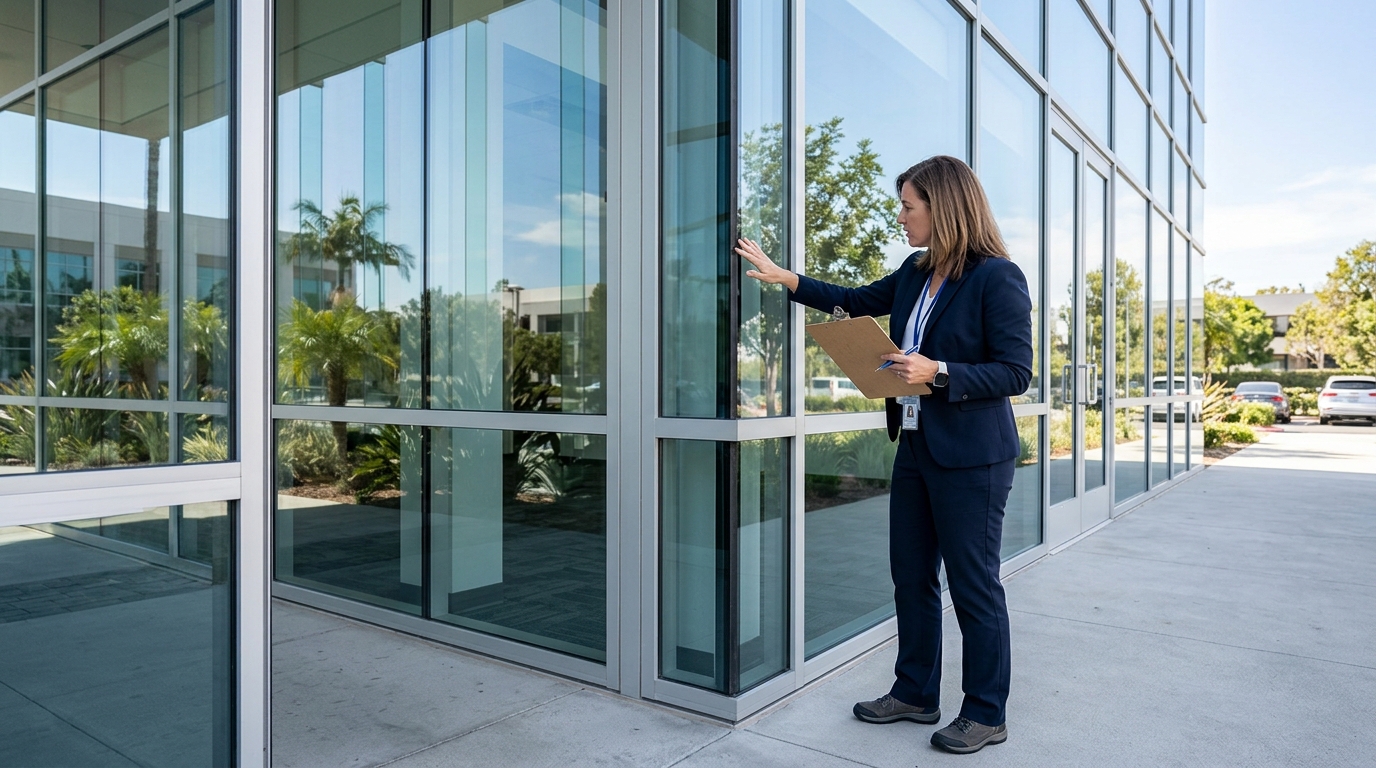
Commercial Glazing Maintenance Checklist for Property Managers
A seasonal maintenance checklist for commercial glazing systems. Learn how to inspect seals, identify early failure signs, extend system lifespan, and avoid costly emergency repairs.
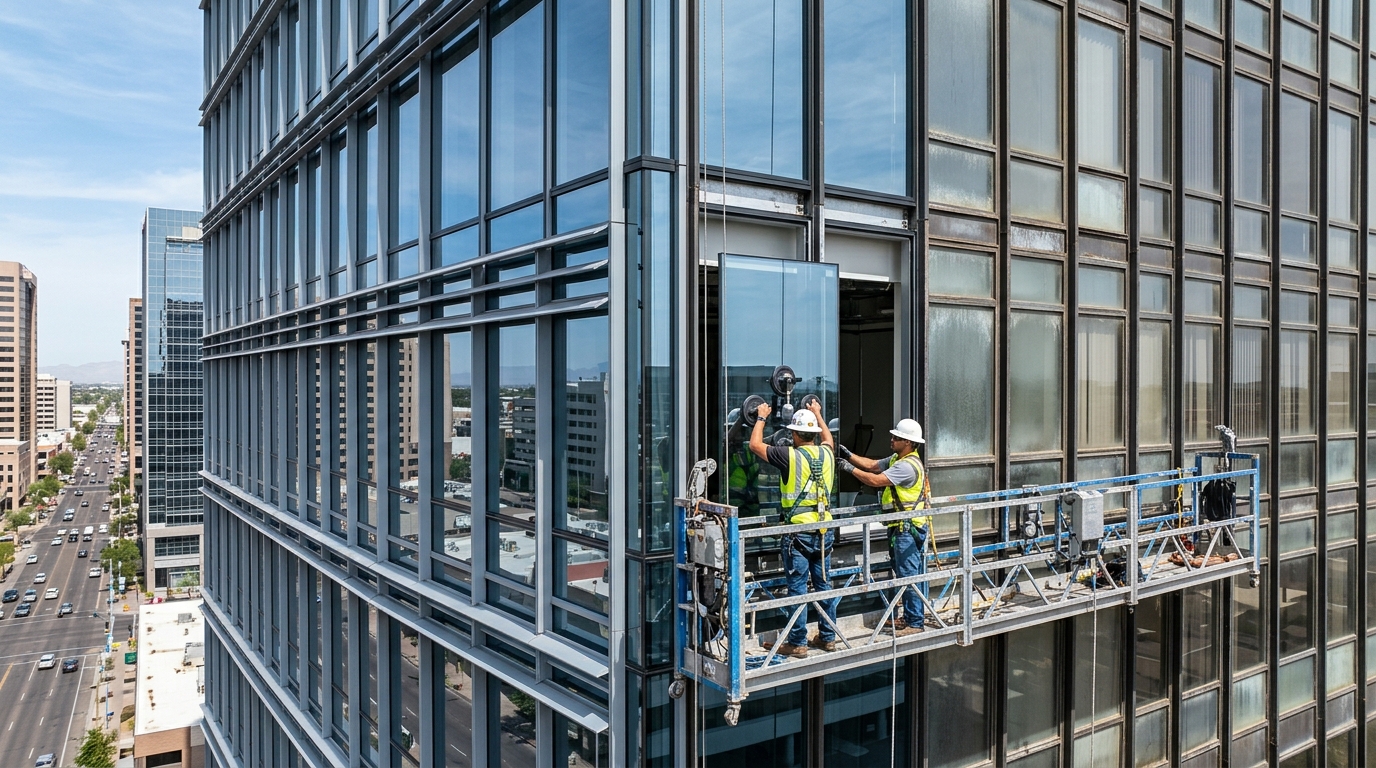
The Complete Guide to Commercial Glass Replacement and Retrofits
Everything you need to know about replacing glass in an existing commercial building. Covers when to replace vs. repair, retrofit options, energy upgrade incentives, and how to minimize tenant disruption.
Retrofit Glass Replacements: Benefits and Best Practices
Discover how retrofit glass replacement helps modernize commercial buildings without full system replacement, disruption, or high costs.