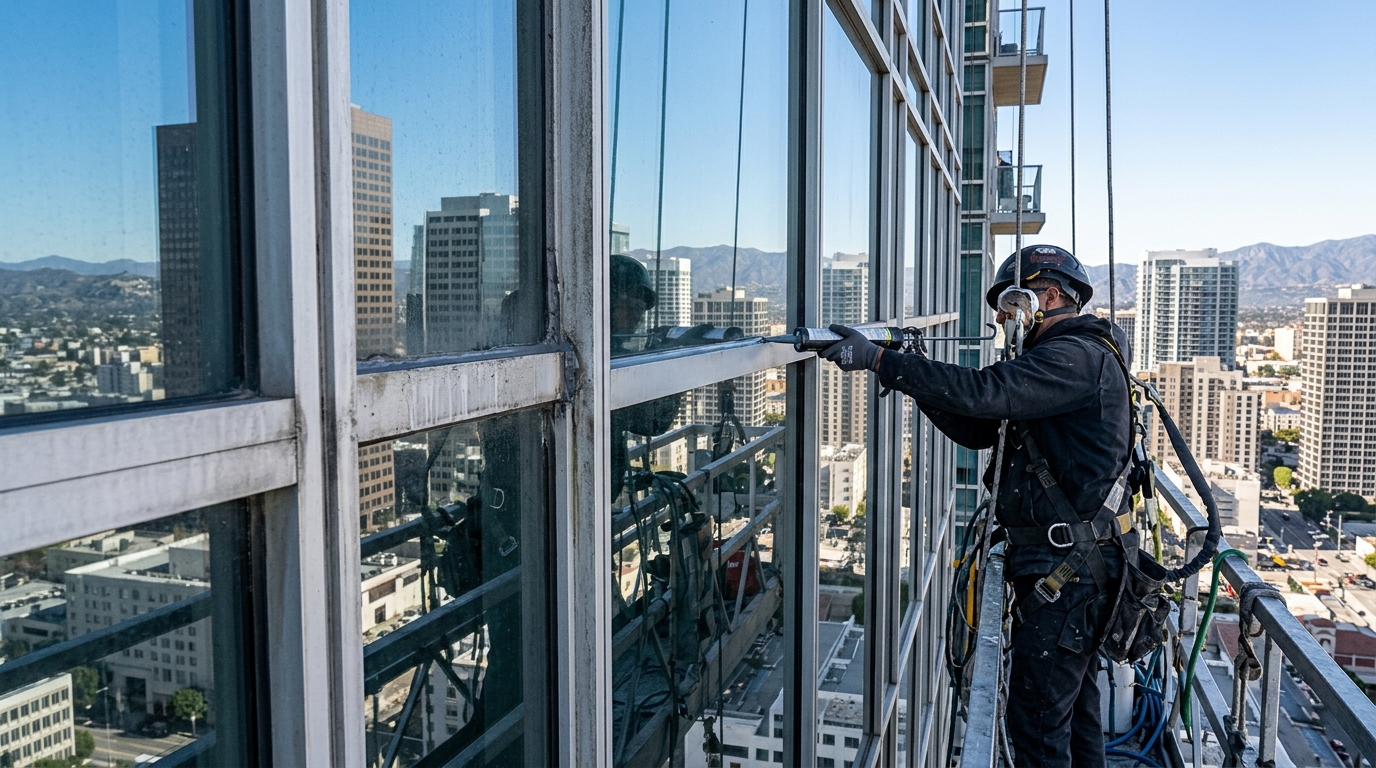
Curtain Wall Recaulk and Reseal: When and Why
A commercial curtain wall should be recaulked and resealed when its perimeter and joint sealants reach the end of their service life, typically 10 to 20 years depending on the sealant chemistry and sun exposure, or sooner if you're seeing water intrusion, chalking, adhesion loss, or cohesive splitting in the joints. Recaulking restores the weather seal and buys another decade-plus of envelope performance at a fraction of reglaze cost. The trick is diagnosing whether you have a sealant problem or a system problem before you spend a dollar on either.
Weathering vs. System Failure
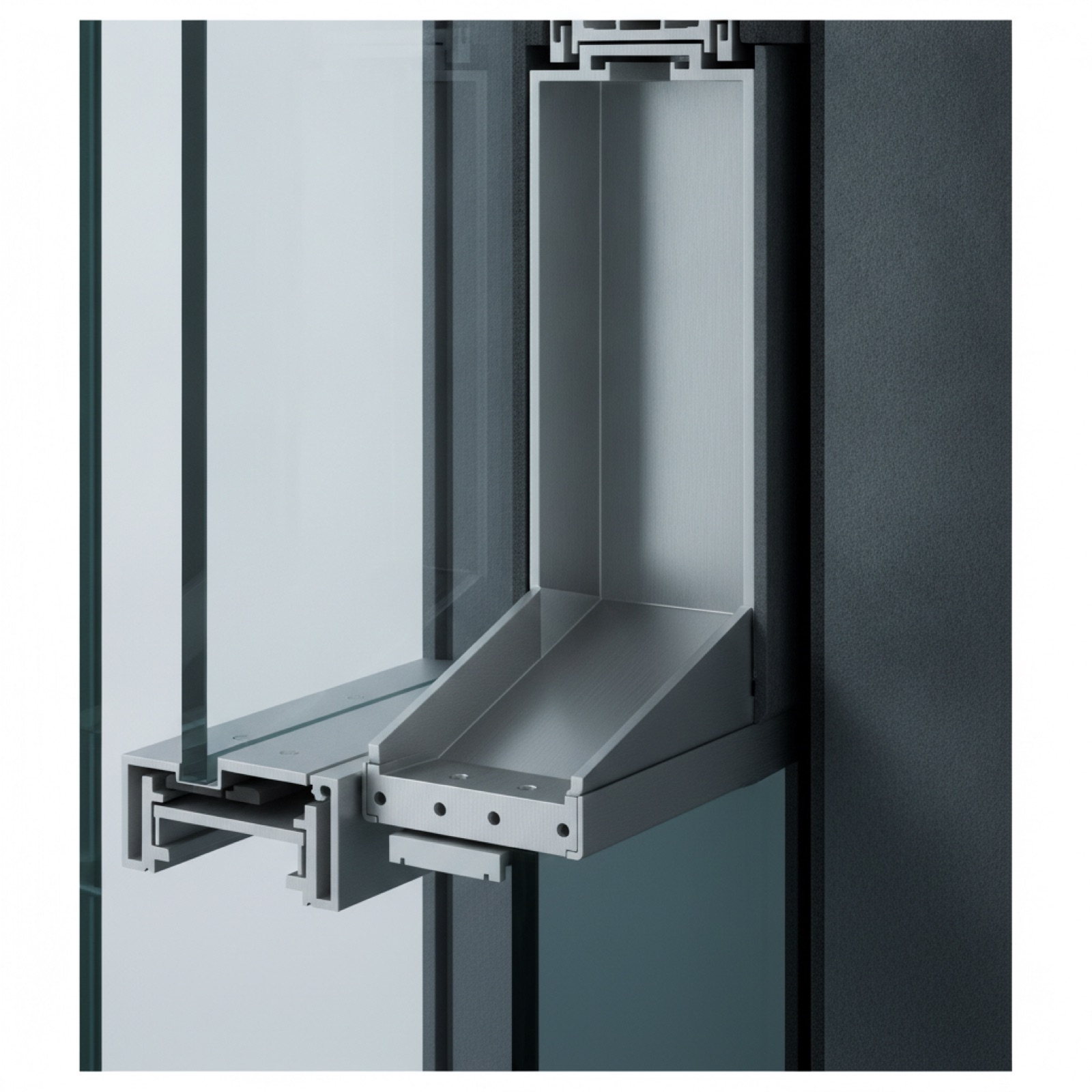
Not every leak is a sealant leak. Curtain wall is a drained and pressure-equalized system: it expects some water to get past the face and relies on internal gutters and weeps to shed it back out. A clogged weep, a failed gasket, or a breached internal flashing leaks even with perfect exterior caulk. So before you reseal, find out where the water is actually moving. Recaulking a system failure just hides the symptom while the real path keeps soaking the slab and the interior finishes.
Reading the Sealant Itself
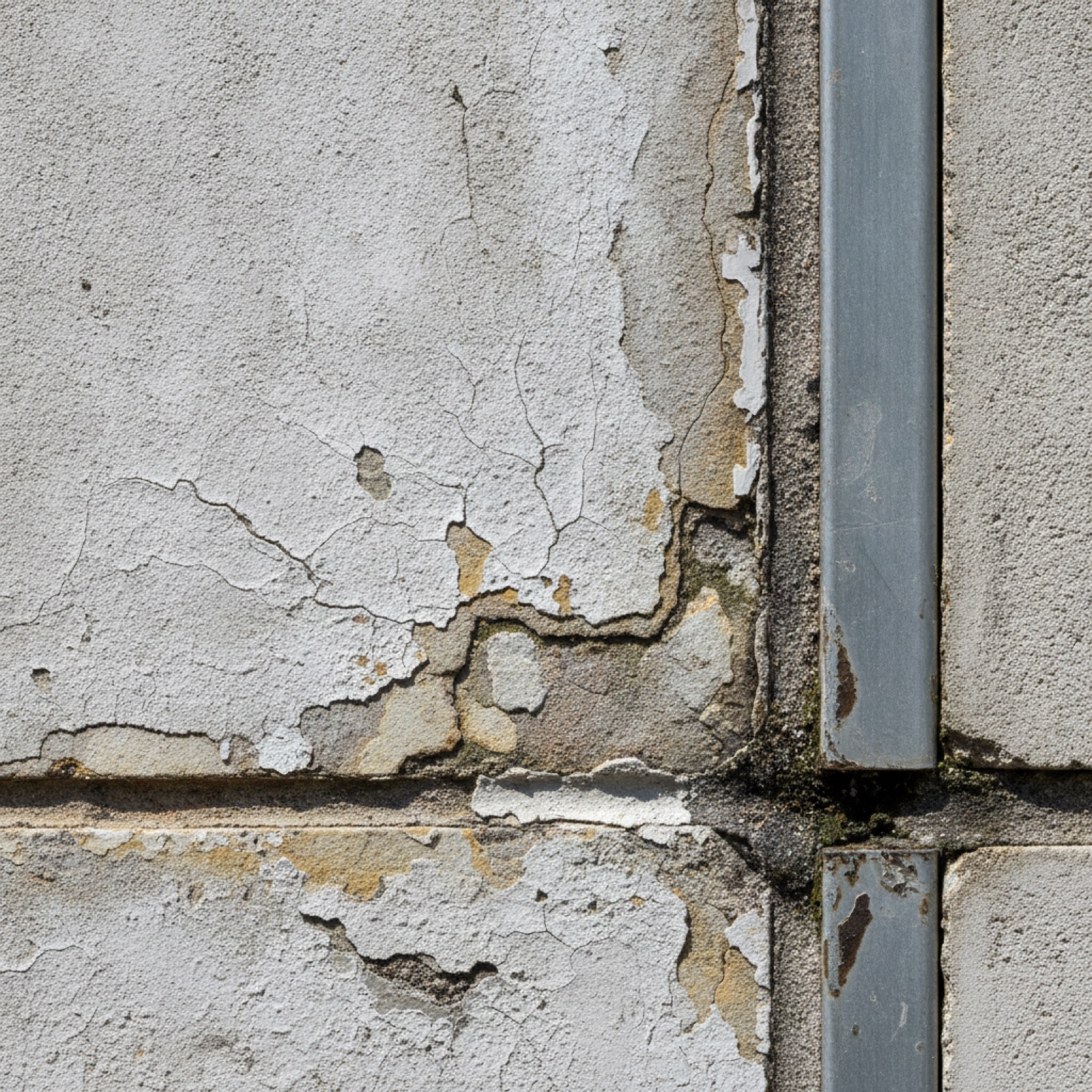
Silicone and polyurethane sealants fail in recognizable ways. Chalking and surface crazing signal UV degradation. Adhesive failure, sealant pulling cleanly off the substrate, points to a bond or primer problem, often the original installation. Cohesive failure, the sealant splitting down its own middle, usually means the joint was undersized for the building's movement. Each tells you something about what the replacement detail needs to correct, which is why a competent reseal starts with cutting test joints, not just gunning new caulk over old.
Recaulk vs. Reglaze: Scope and Cost
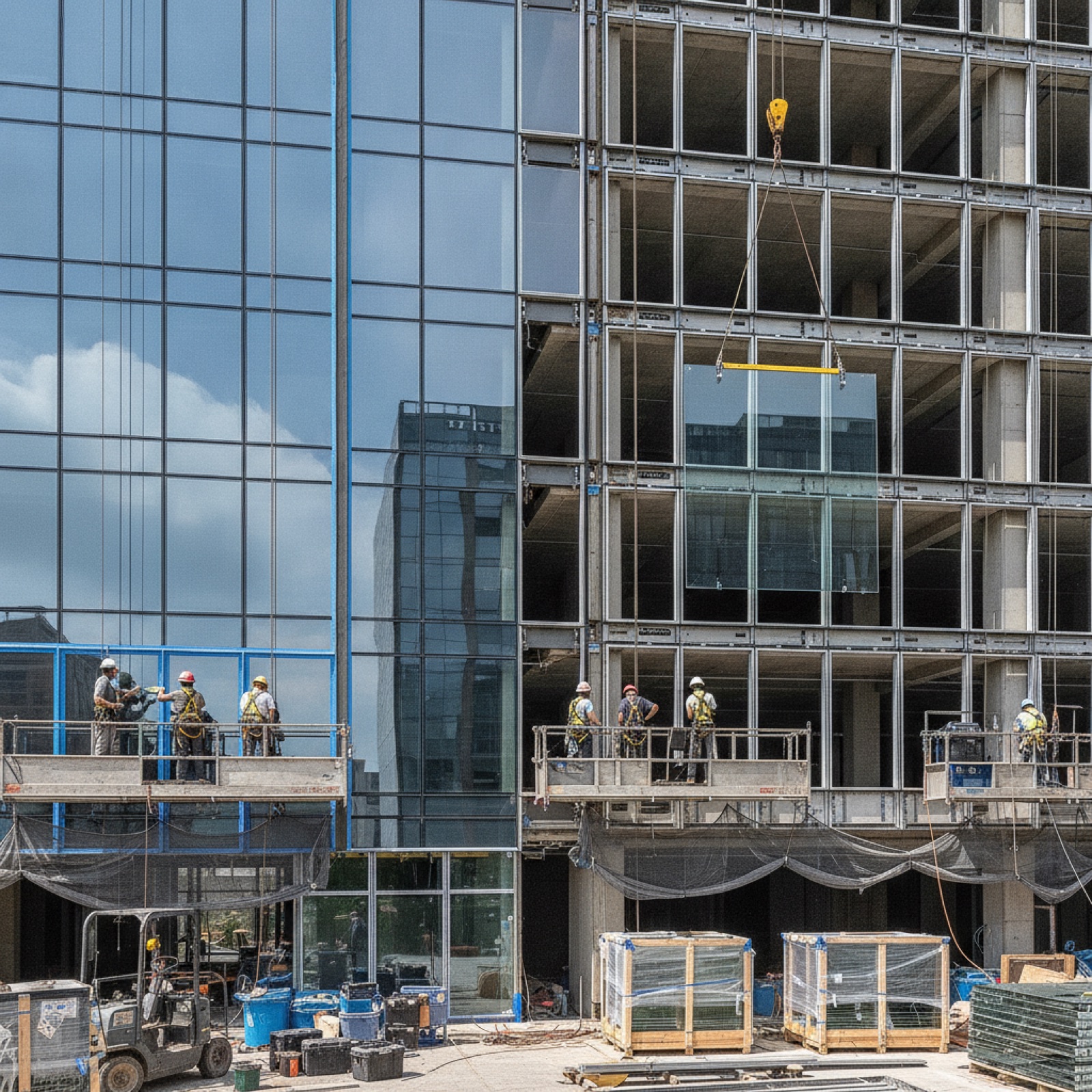
| Factor | Recaulk / reseal | Full reglaze / reskin |
|---|---|---|
| Trigger | Sealant at end of life, localized leaks | Failed IGUs, frame corrosion, thermal upgrade |
| Typical interval | 10–20 yrs | 30–40+ yrs |
| Relative cost | Lowest | Highest |
| Tenant disruption | Low (exterior, swing-stage) | High |
| Verification | AAMA 501.2 field water test | Lab + field testing |
| Envelope gain | Restores weather seal | Restores seal + thermal/Low-E upgrade |
Materials and Verification That Matter
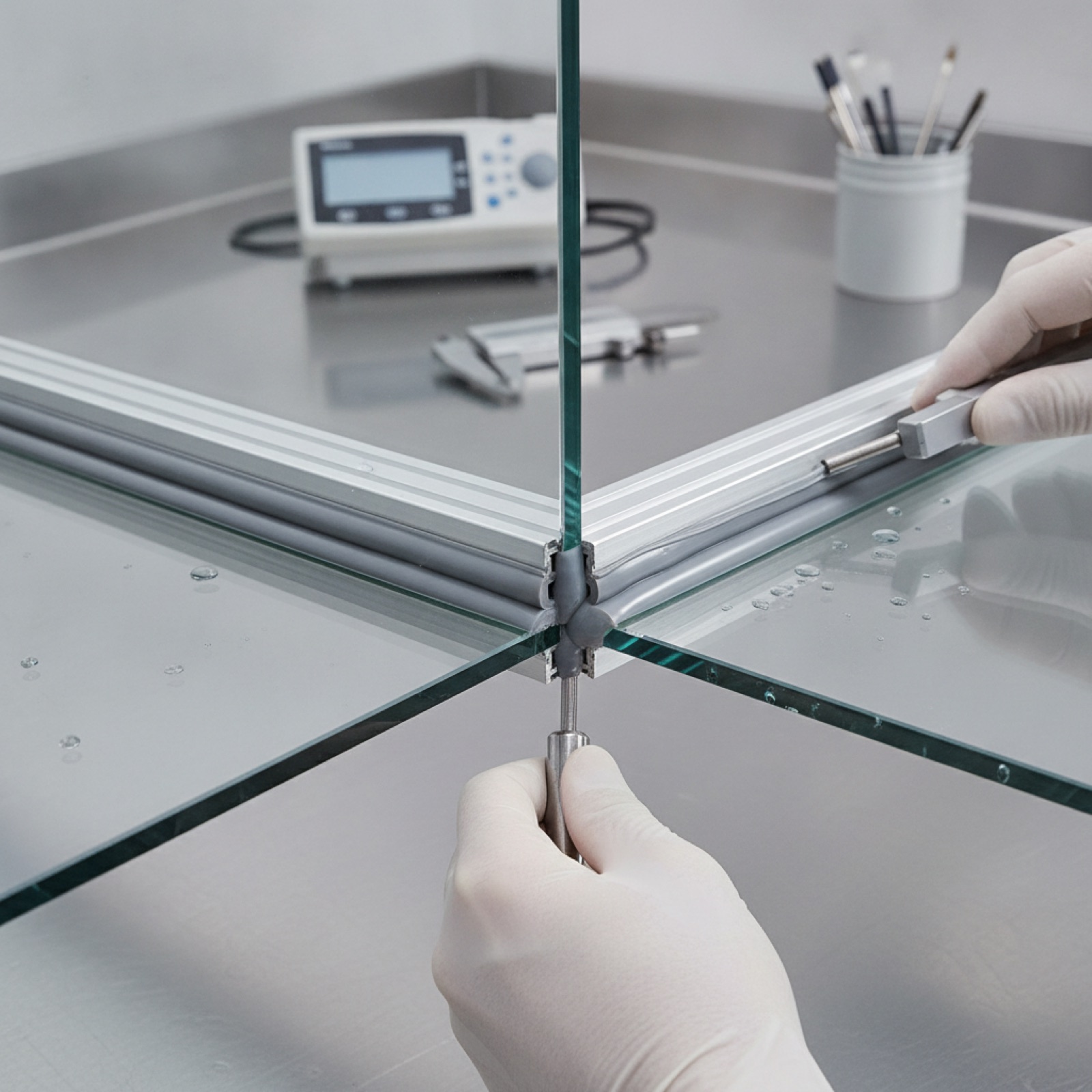
Resealing is only as good as the materials and the proof. Structural silicone glazing joints must be reglazed with a sealant rated for structural duty and compatible with the substrate and any existing sealant, incompatibility causes adhesion loss and staining. After the work, the right verification is an AAMA 501.2 field hose test on fixed, non-operable curtain wall and storefront joints to confirm watertightness, the same standard used to qualify the original installation. Skipping the test means you don't actually know the leak is gone until the next storm.
Why Ramos for Envelope Restoration
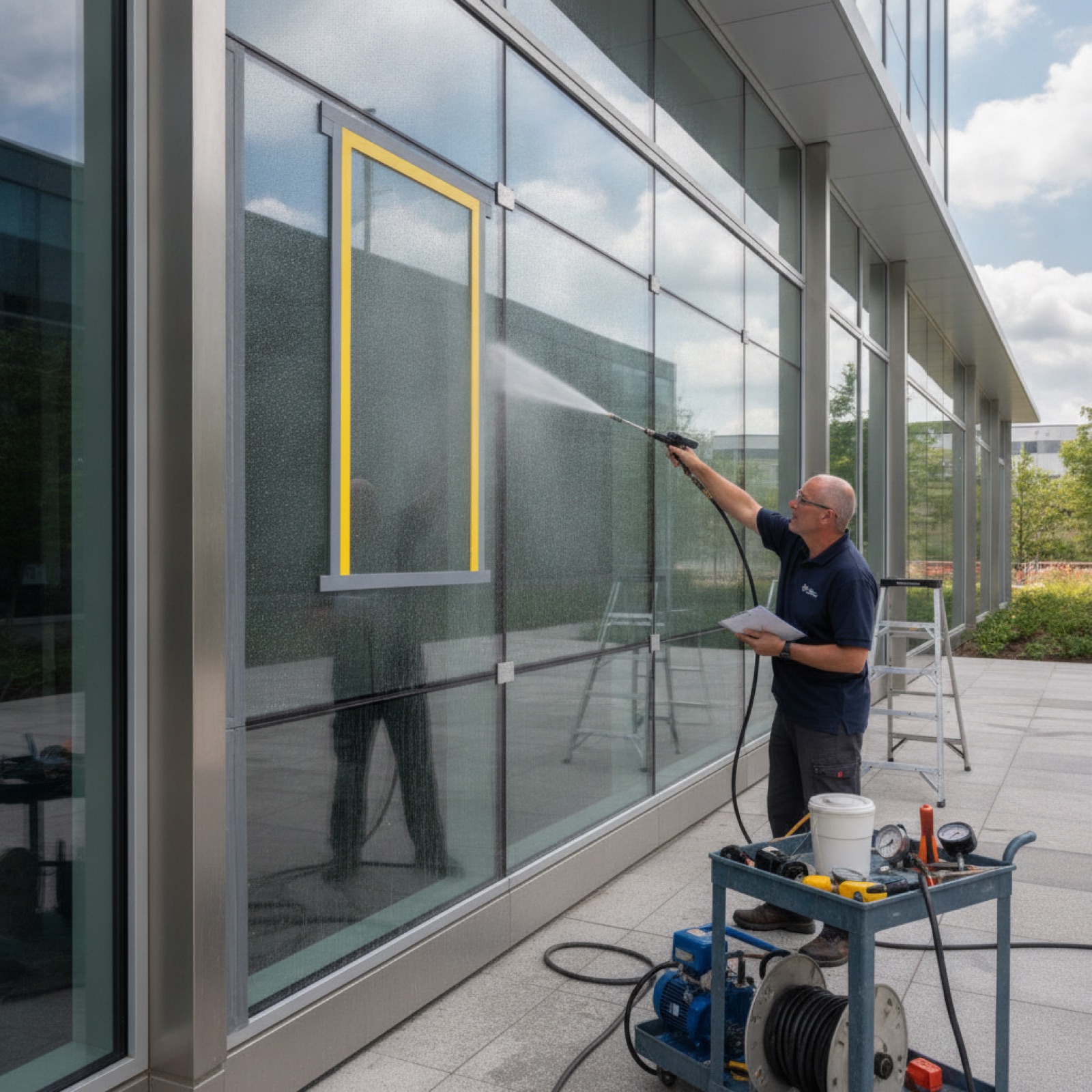
We diagnose before we seal, finding whether you have weathering or a drainage failure, then restore with structurally appropriate, compatible sealants and verify with field water testing. Our W-2 installers do the swing-stage work, and our submittals document the joint detail, the product data, and the test results so building owners have a paper trail. Licensed in California (C-17 #1034872) and Arizona (ROC #343677), serving SoCal and the Phoenix metro since 1987, all warranty-backed.
Stop the Leak at the Source
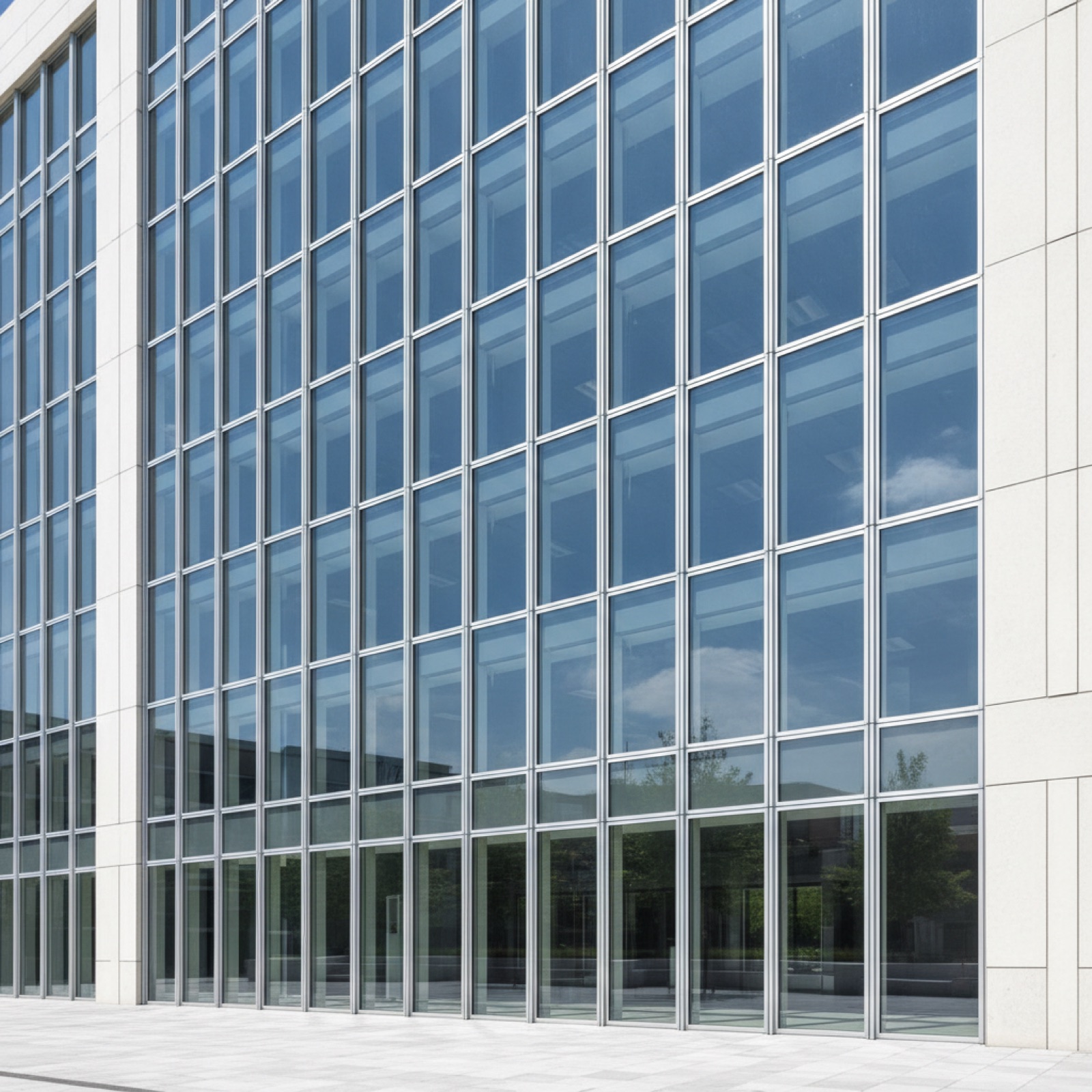
If your curtain wall is chalking, staining, or leaking, get it diagnosed before the next rain finds the interior finishes. Request a Glazing Bid for a reseal assessment.
Frequently Asked Questions
Related Services
Curtain Wall
Aluminum curtain wall systems for commercial new construction, including stick built and unitized assemblies with insulated low e glazing.
Smoke & Water Infiltration Testing
Comprehensive testing to identify leaks and air infiltration in glazing systems. We diagnose and resolve water intrusion issues.
Related Articles
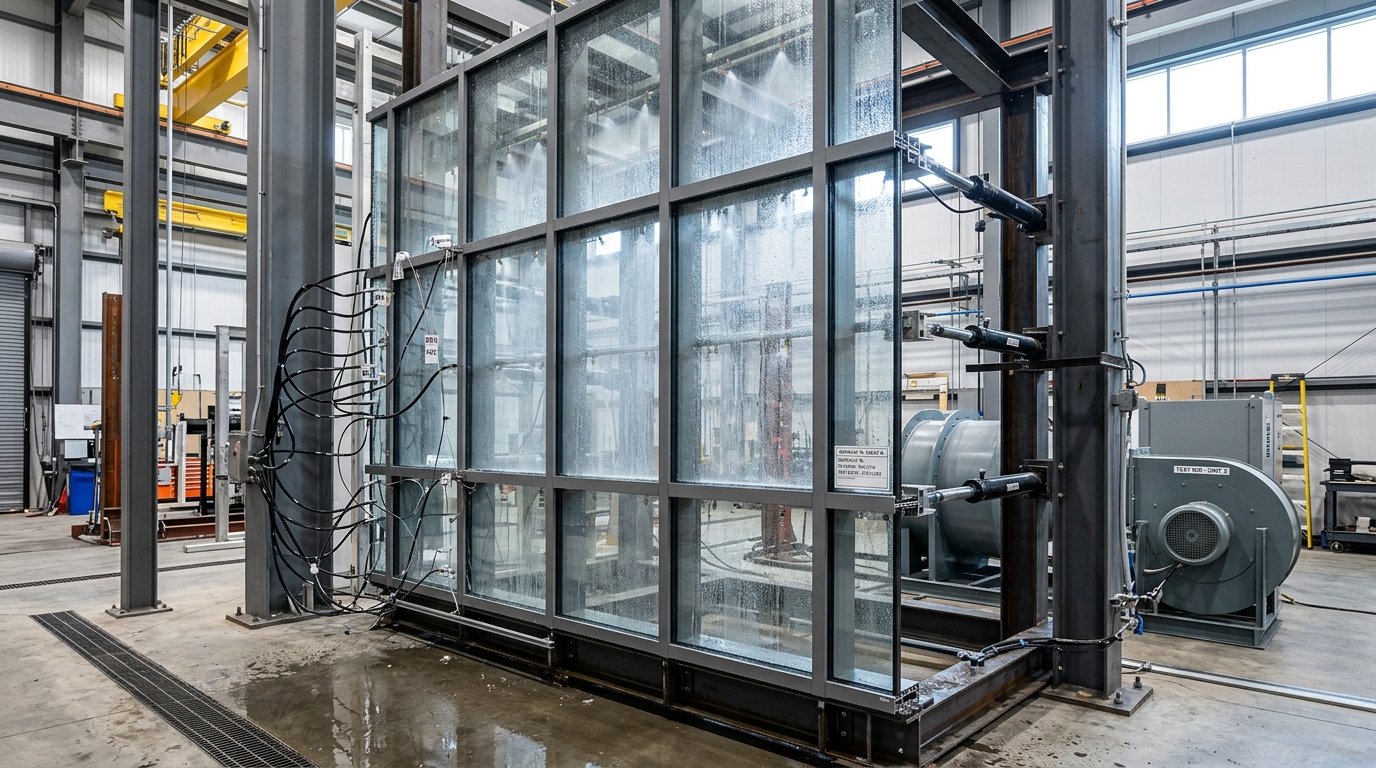
AAMA / ASTM Testing for Curtain Wall: What GCs Should Demand
The AAMA and ASTM tests GCs should demand on curtain wall: E283 air, E331/AAMA 501.1 water, E330 structural, 501.4 seismic, 502 field testing. Full guide.
Navigating Title 24: 2025 Commercial Window and Glazing Requirements
What the 2025 California Energy Code (Title 24, Part 6) requires of commercial windows, storefront and curtain wall: U-factor, SHGC, VT, NFRC labels and replacement rules.

Commercial Glazing Lead Times in SoCal by System (2026)
2026 commercial glazing lead times in Southern California by system, storefront, curtain wall, unitized, IGUs, and specialty glass, plus what drives delays.